
Pregnancy forced Leah Atieno out of school before she could join secondary school. But at 19, the young mother has found another way to rebuild her future through agribusiness.
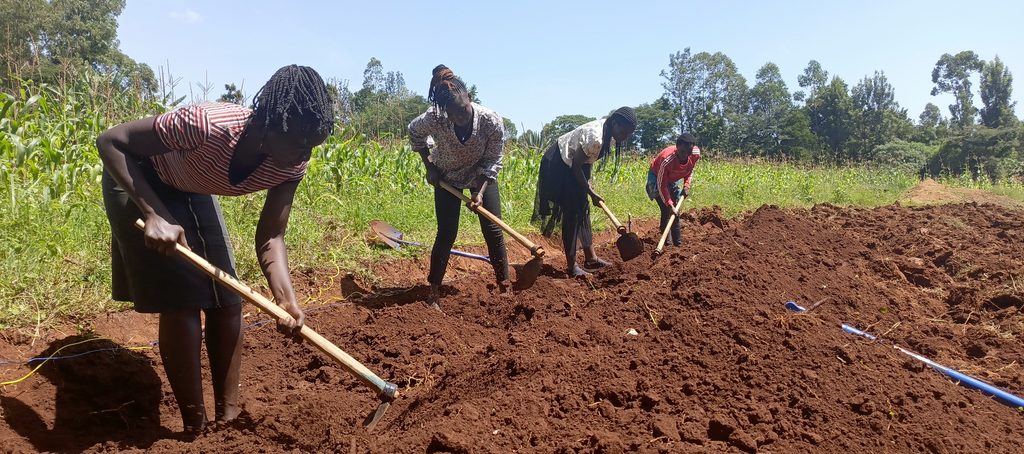
Clutching her jembe, Atieno heads to a local demonstration farm, where she joins 19 other young mothers learning practical farming and business skills.
The women are supported by the Society Empowerment Program, or SEP, a community-based organization that helps young mothers pursue economic opportunities after early pregnancy interrupts their education.
“I have learnt a lot through this program. I had not envisioned myself as a farmer, but now my attitude has changed,” Atieno said.
The youngest of four siblings, Atieno was born and raised in Kajulu, Kisumu County. She relocated to Oyugis in 2023 after dropping out of school because of pregnancy.
“I was in Standard Eight when I discovered that I was pregnant. I persevered and sat for my KCPE (Kenya Certificate of Primary Education) examinations,” she said.
A few months after the examinations, she gave birth to a baby girl.
“I lost my dad sometime in 2017, so all this time I was under the care of my mother who disclosed to me that she could not afford to take care of me and my baby, and still get me school fees,” she said.
School dropout
Without money for school fees or support to care for her child, Atieno discontinued her education without joining secondary school.
She moved to Oyugis to live with her sister, who enrolled her in a tailoring course at a neighboring vocational training center.
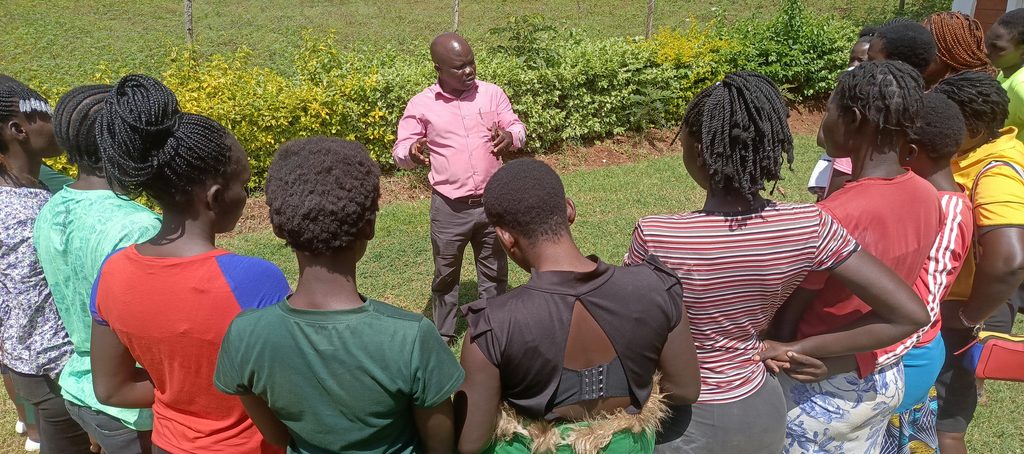
There, she met SEP outreach officers conducting youth engagement forums. The officers teach young women how to avoid teenage pregnancies and enroll teenage mothers in economic empowerment programs.
“I learnt about the agribusiness project, and I expressed interest to join,” Atieno said.
When Lake Region Bulletin visited the demonstration farm, she had been in the program for three months.
“Today we are practicing double-digging. Once the farm is ready, we will be planting various types of vegetables on it,” she said.
She explained: “Double-digging is a gardening technique used to loosen compact soil through increasing the depth of the top soil. It is commonly applied when establishing new garden beds to encourage deep root growth, excellent drainage, and high vegetable yields.”
Atieno is not the only young mother working to find a way forward after leaving school.
Valenta Akinyi, a resident of Nyalgosi Kochieng village in Central Kasipul, Homa Bay County, became pregnant in 2019 while in Form Three.
“I lost my dad when I was still young, and my mum died in 2017, so this exposed me to abuse, and when I got pregnant, there was no one to shoulder the burden,” she said.
She later encountered SEP outreach officers at a local clinic.
“It was sometime in 2025 when I had taken my baby for the normal clinic visits when I bumped into the team giving talks to young mothers at the facility, and I got interested,” Akinyi said.
Salome Ochieng, 25, joined the program at the same time. A resident of Kamine village in South Kasipul, she became pregnant in 2020 at age 18, also while in Form Three.
“I had to drop out of school, and got into marriage the following year as my old grandmother who was my sole breadwinner could not support me and my child,” Ochieng said.
She was orphaned at age 5.
Their experiences reflect wider challenges facing young mothers in Homa Bay County.
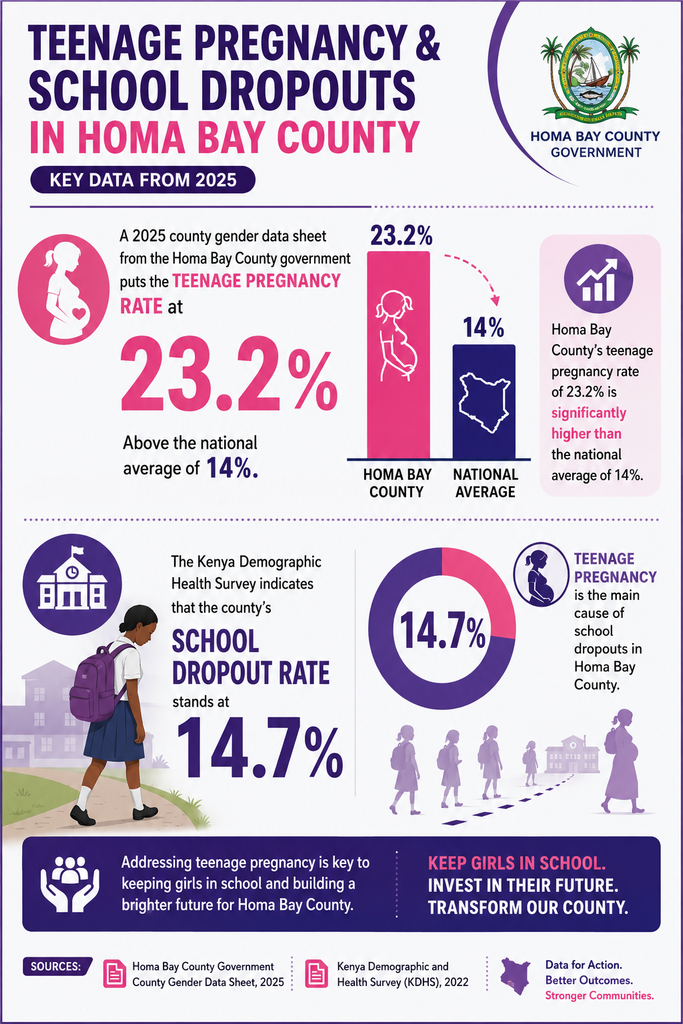
A 2025 county gender data sheet from the Homa Bay County government puts the teenage pregnancy rate at 23.2%, above the national average of 14%.
The Kenya Demographic Health Survey indicates that the county’s school dropout rate stands at 14.7%, with teenage pregnancy the main cause.
Although the government’s school reentry policy allows teenage mothers to continue their education after giving birth, many young mothers in the program do not return to school.
Local solutions
SEP Director Festus Oyugi said they often lack the emotional and financial support needed to care for themselves and their babies while continuing their education.
“For the young mothers we have recruited into our program, only about five per cent are willing to go back to school. And that is why we looked into alternatives such as agribusiness to economically empower those who are not willing to continue with education,” he said.
Founded in 2002, SEP initially focused on developing teenage girls’ talents through sports and arts and connecting them with opportunities across the country.
But as cases of teenage motherhood grew, the organization expanded its work.
“Teen motherhood came with a number of challenges, ranging from economic pressure to fend for the children, psychological pressures among others. These made it difficult for the girls to excel in sports,” Oyugi said.
The organization introduced several economic empowerment programs, with agribusiness emerging as the most popular among young mothers.
“In a bid to fend for their children, many of the young mothers were getting into small businesses like selling vegetables, cereals and fruits. So getting into agriculture was, for them, a boost towards their business ventures,” Oyugi said.
SEP now operates a one-acre demo farm, where groups of young mothers attend weekly training sessions over six months.
Alongside crop husbandry and modern farming techniques, participants learn bookkeeping, entrepreneurship and life skills. They also receive psychosocial support.
“Our experience has shown that the young girls can beat the stereotypes associated with teen motherhood that they cannot engage in farming,” Oyugi said.
For Atieno and her peers, the focus is to better her life, so as to avoid the risks which come with teen motherhood, such as early marriage, Gender Based Violence, and other health challenges.
“If I can find a way of giving my baby a decent life and take care of my basic needs, I know I can be patient enough to build a career out of this,” says Atieno.
Lake Region Bulletin Young Mothers Project is part of the Young Mothers Consortium, a regional initiative supported by the Conrad N. Hilton Foundation and working across Kenya, Mozambique, and Tanzania to center young mothers’ leadership and voices.

