
In 2026, James (not his real name) lost his wife of 20 years.
At the time of her death, the couple had nine children together, with the youngest one being just six months old.
This death was a huge blow to James, as he had not envisioned the wife dying before him.
It opened a new chapter in his life; playing both father and mother figure to the children.
“For the 20 years we were together, I played the role of a man and a father. I had no idea I would one day get to play the roles of a mother to our children,” he said.
Two years after burying his wife, James felt he needed a helping hand, as he needed to fend for the family.
It was then that he tried his hand in remarrying, the journey he says hasn’t been easy.
Remarrying
“Every lady I met after the death of my wife treated me like a suspect who had a hand in the death of my wife,” said James.
“For the first lady I met after burying my wife, I explained to her about my children and she agreed that she was ready to take care of them,” he added.
This promise was never kept. In less than a year, James had separated with the lady after realizing she would let the children stay without food any time he was away.
“She would take breakfast then prepare an early lunch for herself and eat everything. My kids would come back from school to empty pots while she would be there sleeping like nothing mattered in this life,” he said.
He added; “One day, two of my kids approached me, teary, and asked me why I had decided to punish them by bringing such an evil woman into their lives. That broke my heart and I had to let her go.”
After a few months, James tried his lack again with another lady. And just like in the previous marriage, things did not get better.
“One afternoon I came back home unexpectedly from my menial jobs, and found my two year old baby crying and looking pale, telling me she hadn’t eaten anything whole day,” James said.
He added; “When I put my wife to task to explain herself, she became wild and reminded me how she was doing me a favor by being my wife. After a disagreement, she left.” he added.
He then decided to take a break from remarrying. Instead, he chose to focus on taking care of his children. But this break only lasted a year, when his aunt linked him with another lady.
This new marriage also lasted a year as the new wife left unannounced.
But James was not giving up any soon. He got another lady, as he needed a helping hand to care for his kids while he went out to fend for the family.
His fourth marriage would only last a few months, plunging him into fresh search for another wife whom she lived with for two years before separating again.
When Lake Region Bulletin visited him, James had just separated with his sixth wife into his widowhood. He said the fifth and the sixth wives left him with a kid each, adding to those left behind by his deceased wife.
“I guess my humble economic status, coupled with the many children I had from my first marriage could be the reason for my unsuccessful marriages. I had a lot of baggage which they (wives) were not ready to help me carry,” said James who now have 11 children to take care of.
“I can say the death of my wife robbed my children and I not just a mother and a partner, but also our sanity and dignity as a family,” he added.
James’s experience is shared by many widowers who have tried to remarry after losing their wives.
Widowers vs widows
The Kenya National Bureau of Statistics (KBNS) 2019 census recorded 1.44 million widowed persons, with female representation standing at about 85.6 per cent, compared to widowers who are 14.4 per cent.
In Homa Bay County, widowers make upto around 0.9-1.5 per cent of the male population while widows make upto 11.5 per cent of the female population.
The report indicates that this gap is attributed to factors such as; life Expectancy as women generally lives longer than men, spouse age gap since husbands are often older than their wives meaning men tend to die first, and remarriage rates as widowers remary much more frequently after losing a spouses.
Many widowhood support organizations in Kenya predominantly focus on widows due to acute systemic challenges like land disinheritance and cultural rites.
Widowers on the other hand typically rely on informal avenues such as community groups, family networks, workplace wellness programs or faith based counselling structures rather than specialized widower focused organizations.
Seventy-two year old Romanus (not his real name) lost his first wife in 1981 while she was delivering their first-born-child.
“She died few hours after being discharged from the theatre room after undergoing caesarian section, leaving me with our newborn baby”, he said.
Working closely with healthcare providers, he nursed his daughter upto the age of three years when he decided to remarry.
He says the death of his first wife shook him so much that he never wanted to remarry, bur was forced by culture that demanded that as the first born in his family, he had to remarry to pave way for his younger brothers.
Three marriages after the death of his first wife, he has since lost two other wives.
“I burried my fourth wife after six years of our marriage. This was a real blow and it took me back to 1981 when I lost my first wife,” he said.
The father of ten now says taking care of the children left behind by his late wives became a real nightmare.
On the flipside, 49 year old Michael (not his real name) who lost his wife in 2015 due to family planning complications that resulted from overbleeding has rejected temptations of remarrying after a single failed marriage following the death of his first wife.
“My wife left me with three children. I chose to single handedly take care of them and our first-born is currently in the university while last-born is in grade seven,” he said.
He admits that remaining unmarried as a widower isn’t a walk in the park either.
“Some women have referred to me as impotent. They don’t understand why at my age I chose to remain single,” he said.
With no formal association groups to offer financial and psychosocial support to widowers, a number of them admit to facing mental health challenges which results to self neglect, drug abuse and other health related issues.
Giving widowers a second chance
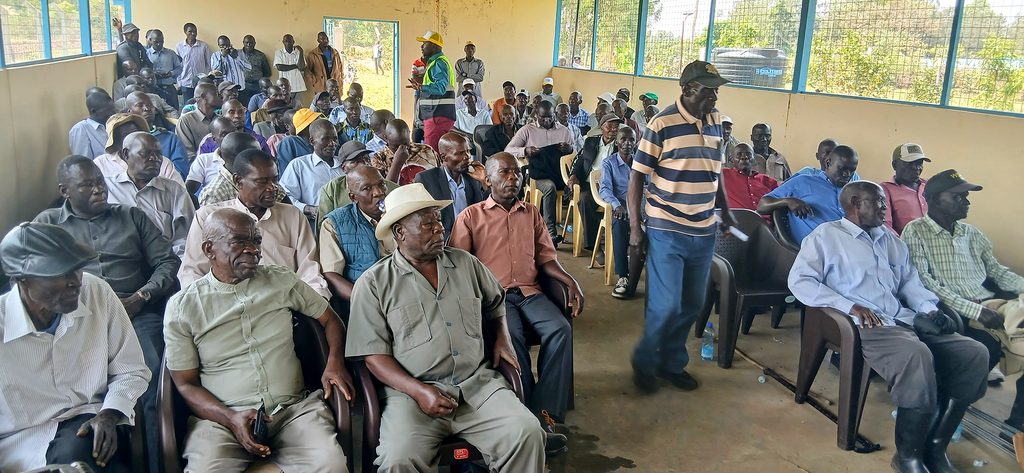
However, for the widowers in Homa Bay, there is light at the end of the tunnel following the intervention by Widowers Health, Empowerment and Support Services Programme(WHESP).
Since 2025, the entity has been implementing programs which support widowers, providing them with an opportunity to rebuild their lives after widowhood.
Through the support of area chiefs, the program put the widowers into support groups, where they can find shoulders to lean on.
Program Director Sam Okombo said the initiative supported by Interior PS Dr Raymond Omollo has so far seen the registration of 11 widowers support groups.
“Our research revealed that much attention and support were given to widows and no one seemed to remember widowers also existed and needed much support as widows,” said Okombo.
Okombo says the awareness forums where they meet with the widowers to share their life experiences which also acts as safe space and support, they discovered sad realities of what widowers go through after the loss of their spouses.
“Greatest challenges that cuts across the 150 stations we have covered nationwide is that widowers lack psychosocial and financial support,” stated Okombo.
The program’s main objective is to ensure inclusivity, bridge the family and societal gaps by sensitizing the society on stigma and stereotype, act as a linkage to relevant support groups for financial and psychosocial support as well as providing the counselling and health checkups services and offer referrals where necessary.
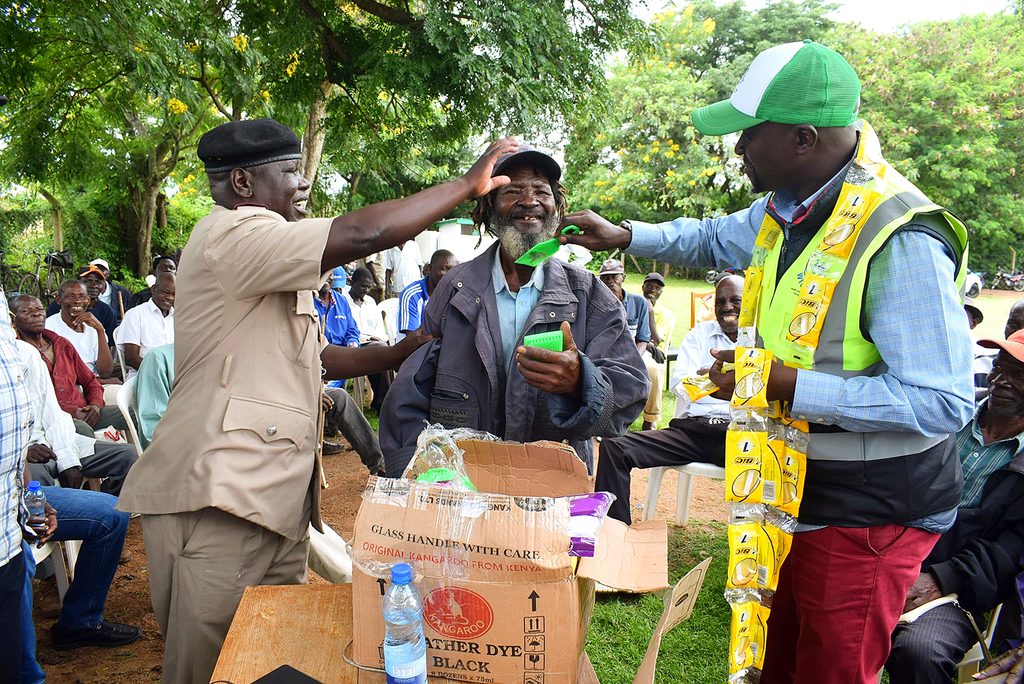
“We also sensitize them on the importance of personal hygien by providing them with bathing soap, tooth brush and paste, hair combs and nail cutters,” said Okombo
He added; “The widowers population is growing and there is a need to create a funds kitty for them just like widows to cushion them financially as well as need for government to pay for them health insurance cover.”
Lambwe West Location Chief Fredrick Onyango Odero noted that school attendance among children of widowers is worrying due to the parental challenges they face.
“The presence of a mother at home and in children’s life is very crucial and so it is such a challenge for men to fit into their shoes and make a home habitable for the kids and raise them well,” he said.
“Apart from the financial support, these men need counselling and psychosocial support and I would urge the government and other stakeholders to also give attention to widowers,” he said.
The widowers are however optimistic that the proposed Widowed Persons Protection Bill 2026 will be the lasting solution to their predicaments.
The bill sponsored by Rarieda Member of Parliament Otiende Amollo has been tabled before the National Assembly awaiting its first reading.
This Bill seeks to establish; Widowed Persons Protection Board to advise the government bodies on welfare and empowerment, facilitation of legal aid and coordinate trauma and mental health counselling, mandate the national and county governments to maintain data on widowhood and integrate support services into planning and public health frameworks.

