
At least 12, 000 women are set to benefit from advanced capacity building on financial literacy aimed at improving their group investments.
The two year program by Ushindi Empowerment Group christened ‘Mviringo Capacity-Building Program’ targets 800 ‘chamas’ drawn from 10 counties of Nairobi, Kirinyaga, Kisumu, Kajiado, Kakamega, Trans Nzoia, Meru, Kiambu, Busia and Taita Taveta.
The selected groups will benefit from training and mentorship in financial management, entrepreneurship, leadership and rights awareness.
“The reason why we went the chamas way is that we have seen a lot of growth of individual businesses coming from women working collectively,” said Ella Wafula, Director Ushindi Empowerment during the launch of the project in Busia County on October 27.
She said that, with women already organized in such groups, the Mviringo program is now coming in to turn that collective strength into stronger livelihoods and a voice that carries further.
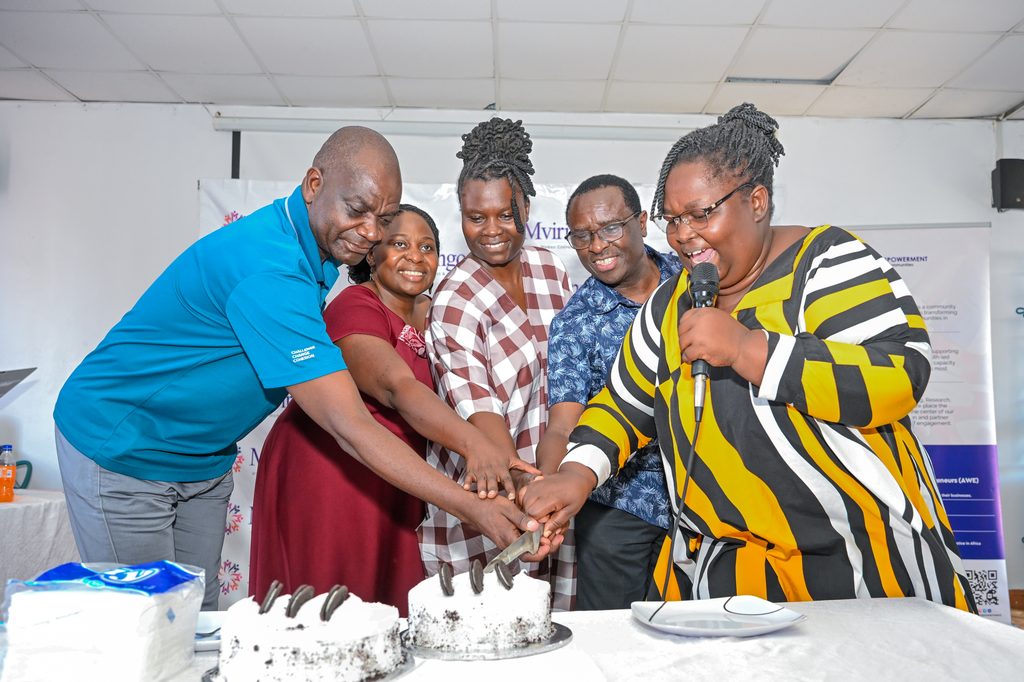
In Busia, 1000 women from 60 women groups were enrolled into the program. The busia launch came after similar launch in Kisumu, Kajiado and Kiambu Counties, with the Kakamega launch held on October 28 where 1,200 women were enrolled into the program.
Ms Wafula said the beneficiaries are expected utilize their strong collective voice to spur economic growth, not only for themselves, but to their counties and regions.
“Chamas have long helped women save, access credit, invest and support their families and communities. Mviringo builds on these established networks, providing practical support to help groups strengthen their management and develop their economic activities.”
Ushindi Empowerment is a Kenyan non-governmental organisation that strengthens grassroots leaders and women- and youth-led organisations, with a focus on gender justice, economic empowerment, climate justice and the creative economy.
Within the two years, the project aims to develop women leaders by providing advanced advocacy training and supporting them to share their knowledge within their communities.
This is expected to build collective networks by connecting participating Chamas through sub-county clusters and county-level alliances, working towards a Federation of Women’s Economic Collectives.
The program will also advance policy advocacy on gender-responsive budgets, land and inheritance rights, safety in markets and trade spaces, and fair protections for informal and cross-border traders, including under the African Continental Free Trade Area.
Peter Lugehe, Senior Social Development Officer, Busia County Government said the program was timely as the capacity building will also enable the women access opportunities within the county.
“I think with this intervention, we will give Busia women a voice, and Busia will be able to walk,” he said.

