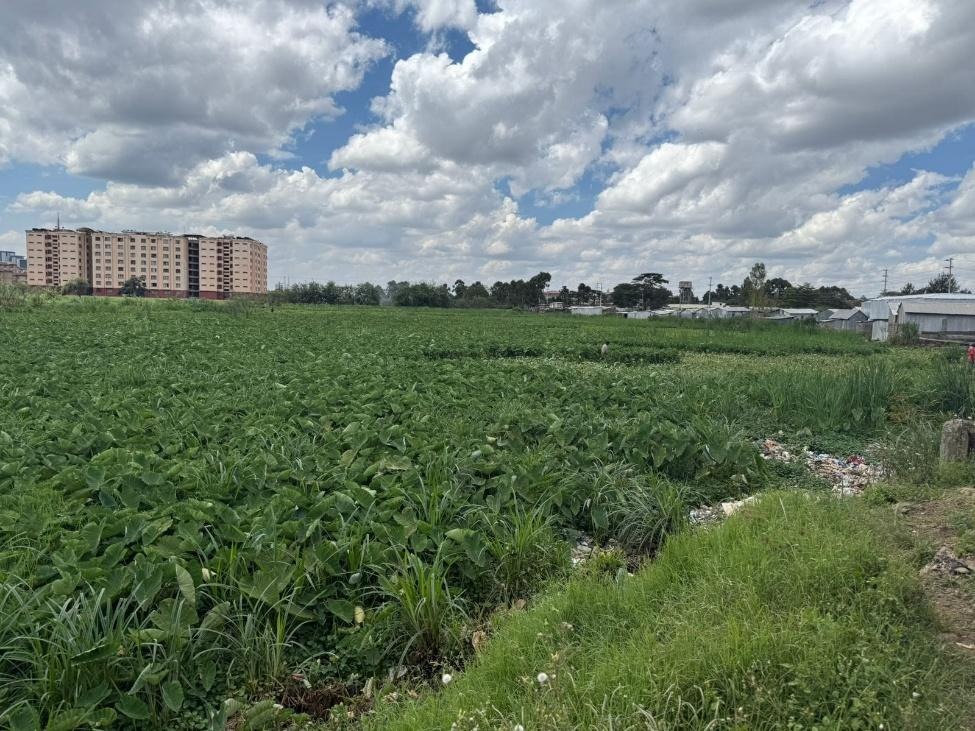
In the peripheral areas of Kibera, the slums starkly contrast with the tall buildings and guarded compounds around Nairobi Dam in Lang’ata, Nairobi West, and South C.
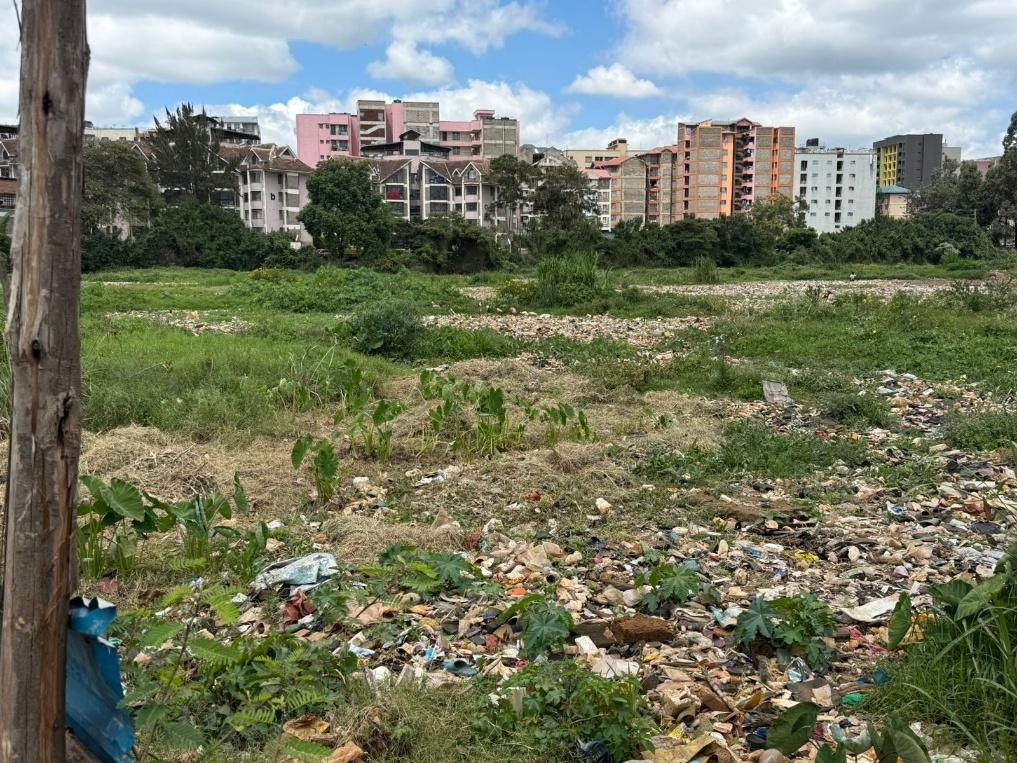
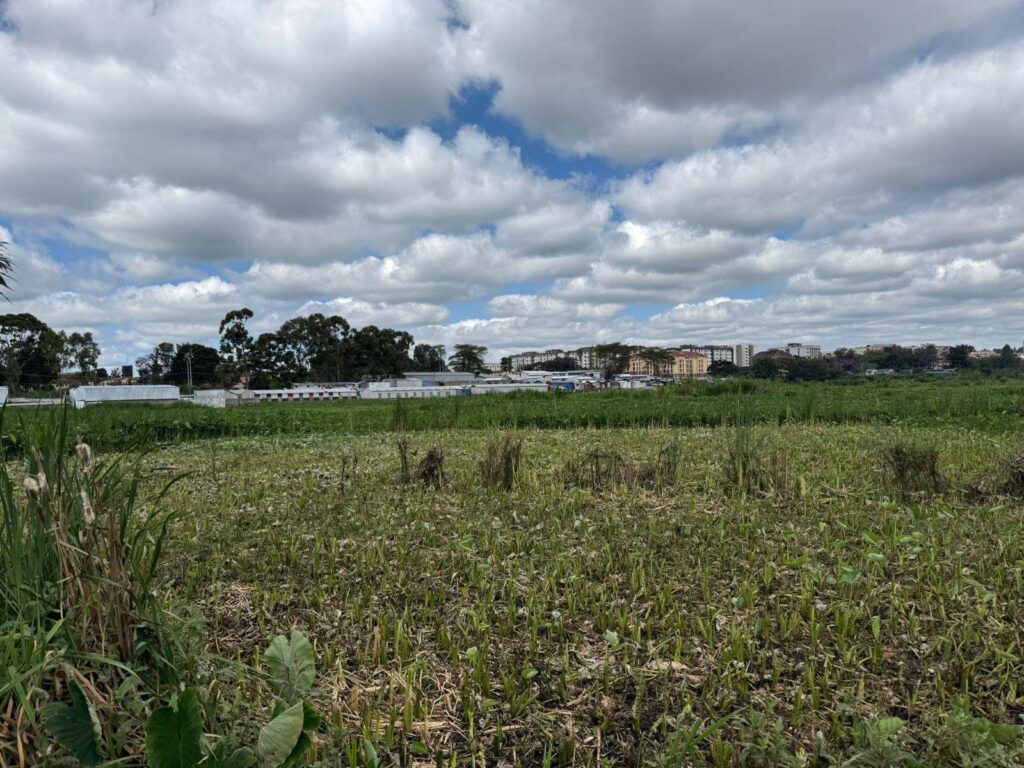
Children dash along narrow paths, while an overwhelming smell hits you, an unpleasant mix of sewage, garbage, and dirty water. Nearby, a dense layer of water hyacinth covers the Nairobi Dam, hiding plastic bags, soil piles, and contaminated water underneath, transforming it into a marsh instead of a reservoir.
From a distance, the land appears solid enough to walk on. However, approaching closer reveals the harsh truth that this is not the case.Beneath the thick layer of floating plants is dirty water, locked below a pile of years of garbage.
“It wasn’t always like this,” says David Mutuku, who has lived near the dam in Kibera all his life, “People used to come here to relax. Now, even standing near it is difficult.”
From Reservoir to Waste Basin
In case of Paul Nyambala, memories attached to Nairobi Dam are tied to another Nairobi, which cannot be imagined by the present generation.
When he was growing up in the ’80s, it was common for people to meet and spend time together at the dam during weekends, while couples would sit beside the dam and children would watch boats cruising on the clear and active water in the reservoir.
“The dam was quite beautiful,” recalls Paul. “People used to come here for relaxation, you could just sit here and enjoy yourself the whole day. There were plenty of birds and clean water in this dam.”
Nairobi Dam constructed in 1953 holds back a reservoir with storage capacity of 98,000 m3 and surface area of 350,000 m2 (86 acres).
It is a shallow lake with an average depth of only 2.76 m (9.1 ft). Inflow is from the Motoine River, from rainfall, and waste water from the unsewered kibera settlement.
Outflow is through evaporation and over the spillway into the Ngong River. The Dam is heavily silted and areas have been reclaimed for agriculture by dumping solid waste.
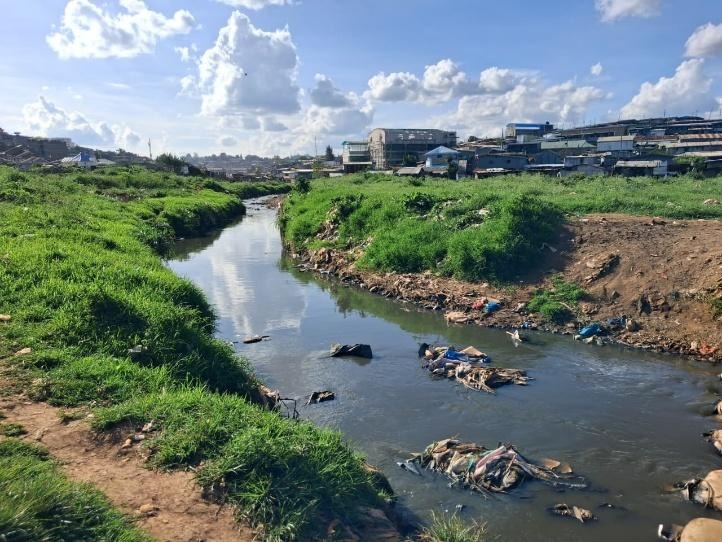
Raw sewage from surrounding settlements and overloaded drainage systems continues to flow into the dam. Nairobi Dam has over the years transformed into one of the city’s most visible environmental failures, choked by sewage, weakened by encroachment, and trapped in a cycle of stalled rehabilitation promises.
The dam’s structural integrity, flood management role, and ecological survival are increasingly under pressure.
According to the Nairobi Rivers Commission, the deterioration of Nairobi Dam is the result of decades of unmanaged urban growth, destruction of wetlands, poor sewer infrastructure, and continuous discharge of untreated waste into the reservoir.
As settlements expanded around the dam, natural drainage systems and riparian zones were gradually encroached on, reducing the wetland’s ability to naturally filter pollutants and regulate water flow.
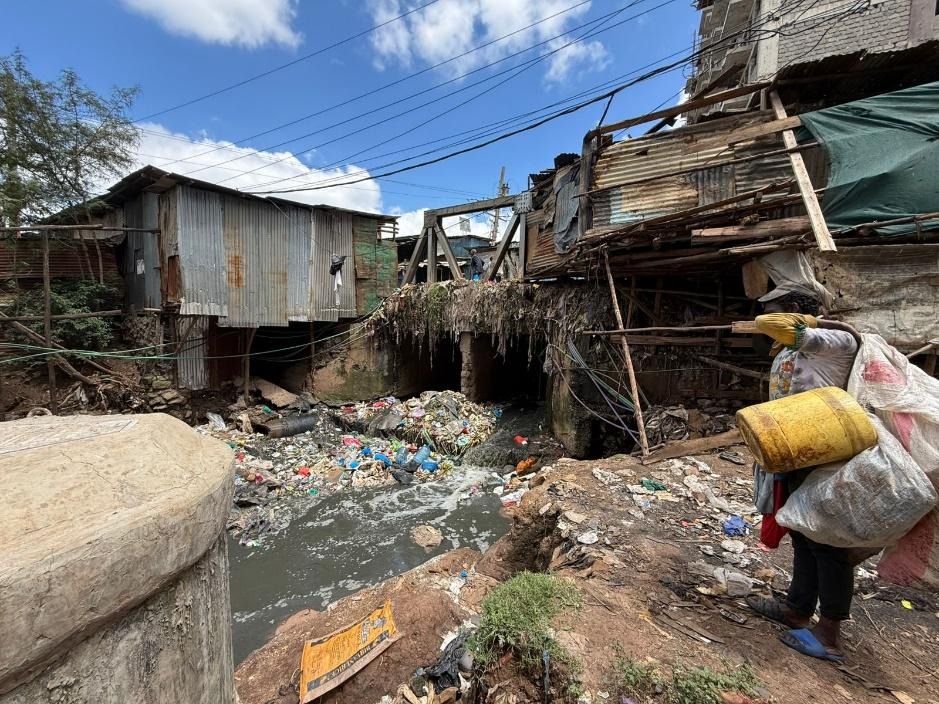
‘According to technical assessments conducted around the dam, sewer lines serving surrounding estates and informal settlements frequently overflow or break during heavy rains, allowing untreated sewage to flow directly into the reservoir,’- Mumo Musuva, the Vice Chair, Nairobi Rivers Commission.
Years of dumping solid waste into river channels and blocked drainage systems further accelerated the dam’s degradation, turning what was once an open water reservoir into a heavily polluted wetland covered by invasive vegetation and floating waste layers.
The Nairobi Rivers Commission also points to aging and overstretched sewer infrastructure as one of the major contributors to the crisis.
“According to technical assessments conducted around the dam, sewer lines serving surrounding estates and informal settlements frequently overflow or break during heavy rains, allowing untreated sewage to flow directly into the reservoir,” said Mumo Musuva, the Vice Chair, Nairobi Rivers Commission.
He added; “The buildup of waste, silt, and invasive plants has significantly reduced the dam’s water holding capacity while increasing flooding risks and pressure on the aging embankment structures. unless pollution entering the dam is controlled at the source, restoration efforts alone may not be sustainable in the long term.”
Concerns over the dam’s condition have also been heightened by past tragedies such as the 2018 Solai Dam disaster, where a dam burst in Nakuru County killed dozens of people and displaced hundreds, exposing broader concerns about dam safety, maintenance, and oversight in Kenya.
While officials maintain that Nairobi Dam is undergoing technical assessments and rehabilitation planning, experts warn that failing to address pollution and structural vulnerabilities early could expose nearby communities to growing environmental and safety risks.
Nairobi Dam’s Pollution Crisis
Environmental experts say Nairobi Dam’s deterioration cannot be separated from the destruction of surrounding wetlands. Wetlands naturally absorb excess water, filter pollutants, and slow the movement of floods.
But over time, parts of the ecosystem around the dam have been encroached on, filled with soil, or converted for settlement and infrastructure expansion.
According to environmental advocate Malasen Hamida of Mazingira Initiative, community engagement remains an important part of protecting Nairobi Dam, even as pollution levels continue to rise.
Hamida says the organization has been working with residents living around the dam through environmental awareness campaigns, clean-up activities, and training programs on proper solid waste management and recycling practices.
“We have tried to educate communities on waste separation, responsible disposal, and the importance of protecting the wetland because many residents directly interact with this environment every day,” she says.
However, Hamida warns that community-led efforts alone cannot solve a crisis of such scale.
“The pollution affecting Nairobi Dam is systemic. You cannot place the burden entirely on residents when untreated sewage, poor infrastructure, and weak enforcement continue to feed pollution into the dam,” she explains.
“What is needed is a multi-faceted approach involving communities, environmental agencies, county authorities, and stronger government intervention to address waste management and pollution at the source.”
“We believe restoring Nairobi Dam begins with restoring community responsibility towards the environment,” says Khalid Munir of Salama Youth, a local Community Based Organisation (CBO).
“Through clean-up activities, tree planting, youth engagement, and environmental awareness campaigns, we are trying to revive the ecosystem around the dam. Kibera was once a green forest with trees and natural vegetation, but over the years that has disappeared because of pollution, settlement, and environmental neglect,” said Munir.
He added: “Community efforts are important, but without stronger government action on sewage systems, waste management, and pollution control, lasting restoration will remain difficult.”
Years of Promises, Little Change
Despite repeated public announcements on rehabilitation, the dam’s condition has remained largely unchanged for years.
Responsibility for its management falls across several institutions, including Nairobi City County, the Ministry of Water, the National Environment Management Authority, and the Nairobi Rivers Commission. Overlapping mandates and fragmented planning have slowed meaningful progress.
According to Prof. Ayub Macharia from the National Environment Management Authority (NEMA), the deterioration of Nairobi Dam reflects decades of poor urban planning, weak enforcement of environmental regulations, and inadequate investment in sustainable waste management infrastructure.
While he acknowledges that waste management efforts in Nairobi have improved over the years compared to previous decades, he says the challenge of restoring Nairobi Dam remains far more complex.
“Managing waste in the city has improved gradually, but saving Nairobi Dam is still a major challenge because this is no longer just a pollution issue, it is the collapse of an ecosystem,” says Prof Macharia.
He describes the reservoir as “a dead dam,” overwhelmed by years of sewage discharge, encroachment, and uncontrolled urban expansion. According to him, limited funding and fragmented institutional planning have further slowed restoration efforts, despite growing environmental and public health concerns surrounding the wetland.
‘Managing waste in the city has improved gradually, but saving Nairobi Dam is still a major challenge because this is no longer just a pollution issue, it is the collapse of an ecosystem,’-PROF AYUB MACHARIA, NEMA
Residents living near the dam say they have witnessed periodic clean-up exercises that rarely last beyond a few days.
“Sometimes they come and remove the waste on the surface,” says a resident, David Mutuku. “After some time, everything goes back to how it was.”
Yet the scale of pollution continues to raise questions about enforcement, long-term maintenance, and whether restoration efforts have addressed the deeper infrastructure problems feeding contamination into the reservoir.
The Cost of Neglect
For nearby communities, the effects of the dam’s decline are no longer just environmental. Health workers in surrounding areas link stagnant polluted water to increased risks of respiratory infections, mosquito-borne diseases, and sanitation-related illnesses.
“We are seeing a direct rise in respiratory infections and malaria because this polluted water never moves,” says medical officer Oliver Kiaye on the public health crisis surrounding the Nairobi Dam basin.
Flooding has also become a growing concern for residents living near the wetland. As drainage systems clog and water levels rise during heavy rains, nearby settlements face increasing exposure to floodwaters and contaminated runoff.
“We worry every rainy season,” says a resident, David Mutuku. “The water rises very fast.”
Can the Dam Be Saved? A New Push for Rehabilitation
In March 2026, amid growing concerns over flooding, pollution, and structural safety, Nairobi County government noted that a more comprehensive rehabilitation effort is finally underway.
Following a multi-agency assessment involving Nairobi City County, the Water Resources Authority, the Nairobi Rivers Commission, and the Nairobi City Water and Sewerage Company, Nairobi Governor Johnson Sakaja ordered the immediate rehabilitation of Nairobi Dam.
Speaking during a site visit, Sakaja acknowledged the scale of deterioration that has accumulated over decades.
“This dam has a long history, dating back to 1953. It was built not just for recreation but to manage floods for downstream areas along the Ngong and Mitumi rivers,” Sakaja said. “Over the years, pollution, sewage, encroachment, and settlements have created serious risks to our people.”
For the Nairobi Rivers Commission, however, restoring Nairobi Dam goes beyond removing visible waste from the surface. Officials involved in the Nairobi River Regeneration Project say the crisis reflects decades of poor planning, inadequate sewer infrastructure, wetland destruction, and years of underfunding that allowed the dam to slowly deteriorate.
“The solutions needed are capital intensive. We are dealing with decades of accumulated pollution, damaged sewer systems, destroyed wetlands, and encroachment. It has been difficult to get the right level of funding commitment needed for a project of this scale,” Mumo Musuva vice Chairperson, Nairobi Rivers Commission
According to the Commission, the Nairobi River Regeneration Project was launched in 2025 as part of a wider national restoration initiative, and it now forms the backbone of efforts to revive Nairobi Dam and surrounding river systems, in an initiative that targets to restore the dam.
The programme includes repairing damaged sewer lines, removing solid waste and invasive vegetation, reclaiming wetlands and riparian land, and restoring the dam’s ecological, hydraulic, and recreational functions.
“We are looking at full restoration of the dam, sewage infrastructure repair and recovery, restoration of wetlands, and bringing back the ecological, hydraulic, and recreational functions that Nairobi Dam once had,” Mumo Musuva vice Chairperson, Nairobi Rivers Commission
The Commission says the project is part of a broader infrastructure programme estimated at KSh80 billion involving multiple government agencies, development partners, and community organizations.
Already, officials say waste collection programmes have begun, while a material recovery facility is under construction in Ruai to support long-term waste management efforts. More than 45,000 youth have also reportedly been engaged through the Climate Works Programme to participate in waste removal and river restoration activities.
Still, the scale of degradation around Nairobi Dam presents enormous technical and financial challenges.
Engineering feasibility studies and financial assessments are currently ongoing, with restoration timelines projected at between one and two years depending on weather patterns and implementation schedules.
“The rehabilitation process will not happen overnight. From our current assessments, it will probably take somewhere between 12 and 24 months depending on implementation schedules and how the rainy seasons behave,” Mumo Musuva vice Chairperson, Nairobi Rivers Commission
The Commission also says restoring Nairobi Dam instead of decommissioning was a deliberate decision aimed at preventing more severe flooding downstream in areas such as South C and surrounding neighborhoods.
“One option was to decommission the dam completely, but technical assessments showed that doing so could worsen flooding in South C and downstream areas. It was agreed that the right thing to do was to restore the dam instead of removing it,” Mumo Musuva explained.
In addition, rivers feeding into Nairobi Dam have now been divided into six restoration sectors, with more than 300 riverline communities mapped out for public participation and riparian recovery work. long-term success will depend not only on infrastructure investment, but also on sustained community ownership and enforcement against renewed encroachment.
“We want this to be a community-led effort so that residents living along the rivers and around the dam also own the process and protect the interventions once restoration is completed,” Mumo Musuva said.
Without sustained investment in sewage management, stronger enforcement against illegal dumping and encroachment, and long-term ecological planning, Nairobi Rivers Commission warn that Nairobi Dam risks slipping back into decline even after restoration efforts begin.
For now, Nairobi Dam remains suspended between collapse and recovery, a polluted wetland carrying decades of neglect, but also the possibility of revival if long-promised interventions finally materialize.

