A random visit to early childhood education centres in Kenya, you are likely to meet learners as young as three years old, anxiously seated in class.
This picture is different at the Kakamega School for the Deaf, where early learning often begins much later and in a very different way.
Here, children arrive at school as late as at the age of 15, long after their peers have already mastered reading and writing. When they finally arrive, many are behind because they are arriving without a language.
“We pick these learners from the community without a language,” explains Mr Andrew Akhonga, head of the institution.
He adds; “The first language they acquire here is Kenyan Sign Language, and that begins at the early childhood level. You cannot learn without a means of communication.”
According to Mr Akhonga, this delay creates a massive gap. Children who attend regular schools without support often fall behind for years. This reflects a wider national challenge. According to the Kenya National Bureau of Statistics, only about 57 percent of early childhood centers in Kenya meet minimum standards for inclusive education.
The scale of the task is huge. Kenya has over 42,000 ECDE centers. Counties like Nakuru and Nairobi have some of the highest numbers of centers, but having many buildings does not always mean they are ready for every child. In many areas, the number of teachers trained to handle special needs remains very low.
In Kakamega County, the challenge is visible in mainstream schools. Nelson Wanjala, the head of St. John’s Mahiakalo School says many centers struggle to support children with disabilities due to limited resources.
“Some learners use wheelchairs, but the classrooms are not designed for easy access,” Wanjala says. “We also lack adapted toilets, and we do not have enough special needs teachers at this level.”
Disability friendly learning
To address this, Dr Jacob Kitari, the Director of Early Childhood Education in Kakamega County says the county is finally turning the tide. Instead of leaving families to struggle alone, the government is teaming up with partners like the National Council for Persons with Disabilities. This helps get gear like hearing aids and wheelchairs directly to the children.
By building classrooms with ramps and ensuring every newly hired teacher is trained in special needs, the county is trying to build a foundation where a disability does not mean a dead end. As Dr Kitari puts it, the goal is simple; they want to create a space where every child feels they truly belong.
However, true inclusion requires a change in how we teach and test. Mr Akhonga believes the national curriculum still has a long way to go. He added that sometimes learners are asked questions about music, but a deaf learner has never heard music. Therefore, asking them about sound is like asking someone to sit an exam in a language they have never heard before.
Fixing the gaps
To fix this, the Kenya Institute of Curriculum Development is being urged to use different types of tests. This means testing a deaf child on the visual rhythm of a dance or the patterns in art rather than the pitch of a sound.
Progress is happening in other parts of the country too. In Nairobi, the county has introduced digital tools for children with visual and hearing impairments. In Homa Bay, play based learning is being used to catch disabilities like mild hearing loss early.
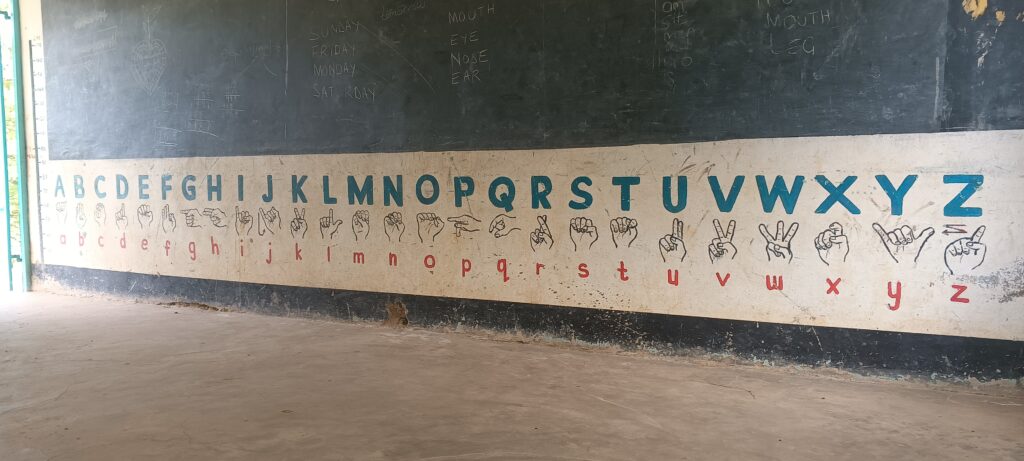
This is where the human touch becomes vital. Elizabeth Washuka, a senior teacher and sign language interpreter at the Kakamega School for the Deaf sees the impact of these changes every day. She explains that inside the school, communication happens through expressive faces and swift movements of hands.
“Many of these children were taken to regular schools first,” Washuka explains. “But because they could not communicate, they were cut off. When they come here, they are frustrated because they cannot speak clearly and they do not know signs.”
She says the first step is not books, but love. “We embrace them and begin with very simple signs like hello, welcome, and we love you. Slowly, they start learning the alphabet, numbers, and simple sentences.”
For teachers like Ms Washuka, the most important transformation still begins with a sense of belonging. “When a child finally learns sign language and can communicate,” she says with a smile, “that is when you see their confidence grow.”
The road ahead is now supported by the law. The Persons with Disabilities Act 2025 has turned inclusion into a legal requirement. This law mandates that every child with a disability has the right to free and compulsory basic education, starting right at the foundational level.
It obligates the government to provide barrier free environments and train interpreters. By implementing these legal promises in our classrooms today, Kenya can ensure that the next generation of learners won’t have to wait until they are teenagers to find their voice. The journey toward an inclusive nation is long, but it starts by making sure that when the smallest learners arrive at the school gate, the door is already wide open for them.

