
The journey of attaining university degree in Kenya is a long and winding one which requires one to excel in primary and secondary schools, before getting admission into the university.
This could be a thing of the past as Africa’s first talent-based university; The Africa Talent University (TATU) sets up its first intake in which admissions will be based on talent, work and business experience, and not the usual minimum requirement of C+ in Kenya Certificate of Secondary Education (KCSE) examinations.
“When I said that people can be admitted to do degree programs even if they are dropouts, I was labeled fake, bogus and rogue person with a rogue institution. How could I say that a Class Six dropout can access a degree program without completing a Form Four and getting a C+? But that is behind us today, and the reality is here,” said the institution Founder Professor Humphrey Oborah.
The intake set for May 2026, comes barely a month after the university based in Kisumu received Letter of Interim Authority (LIA) from the Commission of University education (CUE) to offer degree courses.
‘When I said that people can be admitted to do degree programs even if they are dropouts, I was labeled fake, bogus and rogue person with a rogue institution. How could I say that a Class Six dropout can access a degree program without completing a Form Four and getting a C+? But that is behind us today, and the reality is here’-prof oborah
Education Cabinet Secretary Migos Ogamba on April 20, handed the temporary chatter to the institution at an event in his Nairobi office, in what Prof Oborah described as a major milestone as a result of 20 years journey of vision, persistence and advocacy.
And on April 30, during a press conference at the institution’s main campus at Buoye along Kisumu-Nairobi Road, Prof Oborah confirmed that all was set for the university to receive the first cohort of students seeking admission for university programs, starting May 2026.
“We are opening our doors to every young person who knows they have something special, whether recognized by exams or not,” said Prof Oborah.
He described the move as historic milestone, not just for The Africa Talent University, but for the future of education in Africa.
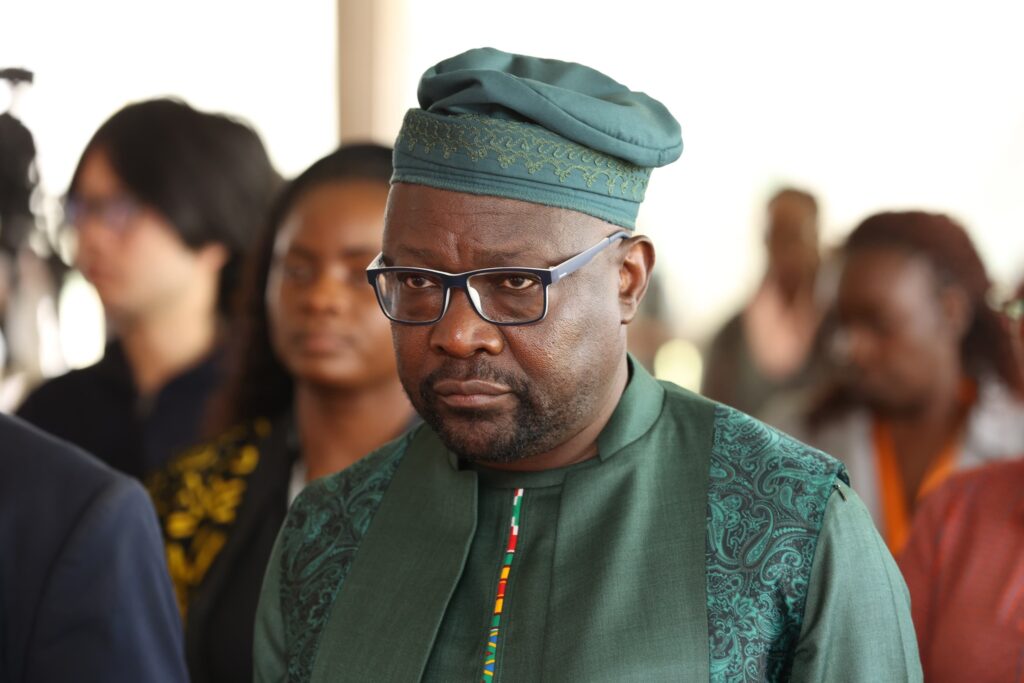
TATU Education model
TATU which became the youngest and 85th university in Kenya has veered off from the traditional system of education determined by class work and examinations.
According to Prof Oborah, the institution has adopted talent-based system which takes into consideration special abilities of the learners.
This means, one may not need to sit the Kenya Certificate of Primary Education (KCPE) and the Kenya Certificate of Secondary Education (KCSE) examinations before seeking for admission at the institution.
Instead, the institution employs a digital technology; Anthropo-biometry, which assesses the learner’s talent and recommends their university entry level.
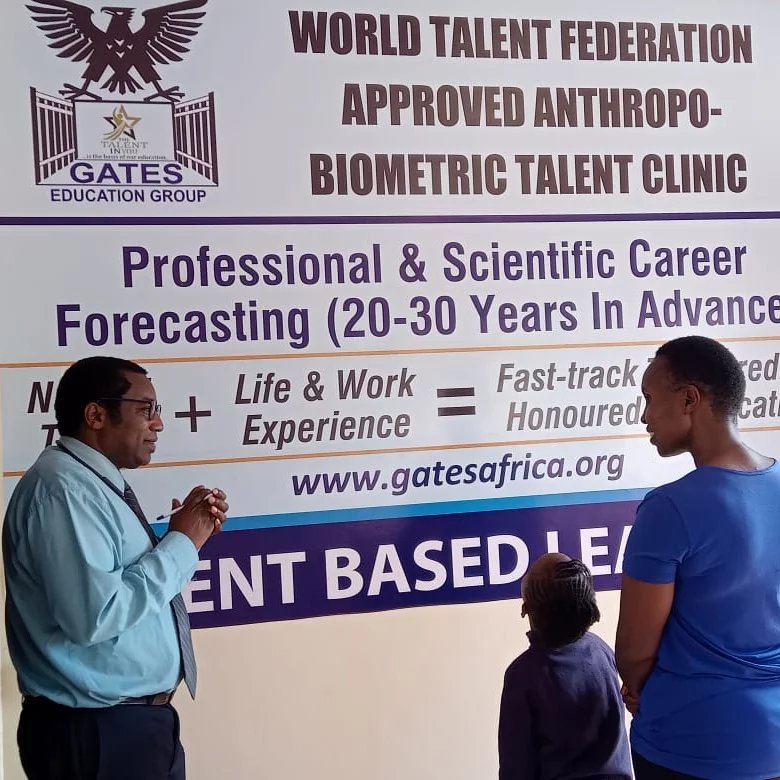
Anthropo-biometric Talent Clinics use 3D scanning, hardware sensors, and specialised software to analyze body measurements, neural channels, and brain metrics to identify inborn talents, personality traits and career paths.
The scientific method provides personalized learning prescriptions based on a 3D “body model”. Prof Oborah says the institution has also been employing the use a tool that can excavate life achievement values and work experience, which can be measured in terms of credit value, and certified.
For instance, someone who drops out of school, but establishes a successful business venture can be assessed based on the various models, and the credits equated with the normal learning levels.
“We use accredited assessors to evaluate the work they have done in their own businesses, document that as a project. That project then becomes the examination, and it is the project that is submitted to the university for assessment of value, graded and given the credits, hence the person gets his or her degree that quickly,” said Prof Oborah.
He added; “In natural learning, it is crime to ask somebody to learn what they already know. That’s is a punishment. If your child is gifted in a way, allow the child to thrive. It is the learning rubrics that should align with the people, and not the other way round.”
Talent system accepted globally
Oborah says this education model is in line with the United Nations Educational, Scientific and Cultural Organization (UNESCO) which supports validating non-formal and informal learning, meaning vocational and experiential learning can be awarded credit equivalent to formal qualifications.
“There is no way that someone can be judged by a two hour written paper. That people are merely admitted to universities based on grades. There is space for other ways of education and one of them is innate abilities known as talents,” he said.
Kenya’s education system is transitioning from the 8-4-4 structure to a 2-6-3-3-3 Competency Based Curriculum (CBC), focusing on skill acquisition rather than rote learning.
The new system involves two years of pre-primary, six years of primary, six years of secondary (divided into junior and senior), and three years of university.
And Prof Oborah noted that TATU’s model is expected to actualize the new CBE)whose implementation has been struggling.
“TATU is designed to produce not just graduates who describe problems, but individuals who solve them,” said Prof Oborah.
He said the institution has since assessed over one million people in Kenya, and another 20 million in other parts of Africa.

