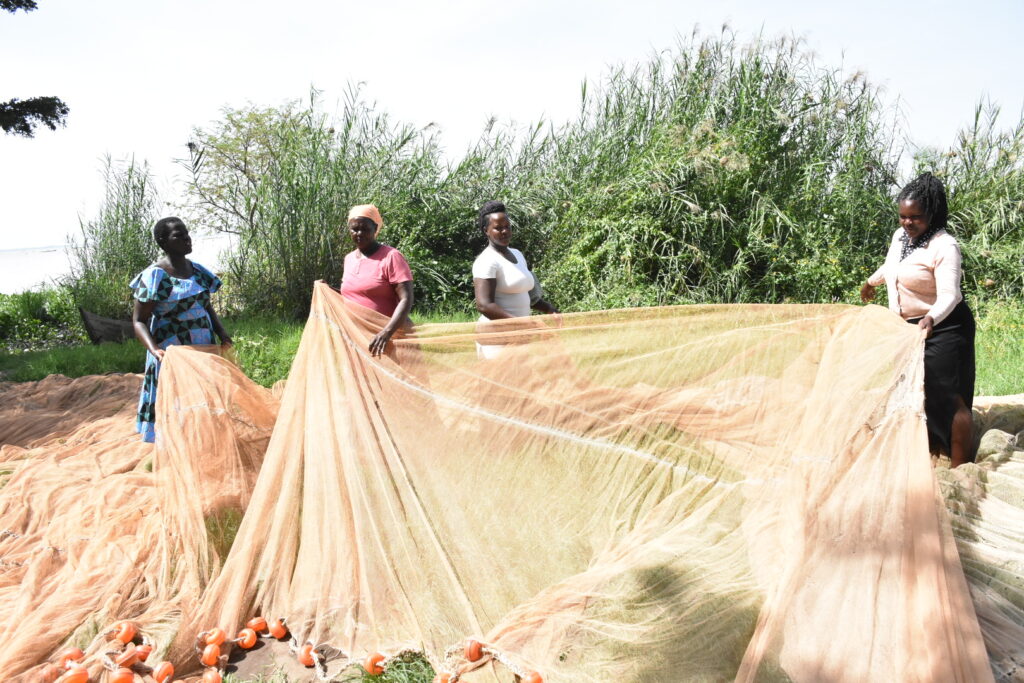
The morning sun glistened on the waters of Lake Victoria as a group of women carefully spread fishing nets along the shores of Sango Rota Beach in Nyakach.
Laughter and hopeful conversations filled the air as they prepared for a journey that many believe will transform their lives.
For years, accessing fish had been a daily struggle for these women, forcing some into a system that has long thrived along the lakeshore the notorious “jaboya” practice, where women are pressured into sexual relationships with fishermen in exchange for fish.
Today, however, things are beginning to change.
A donation of a fishing boat and nets by the Geno Community Development Initiative Trust (GCDI) is offering the women not only a source of income but also a chance to reclaim their dignity and independence.
Among those beaming with hope was 39-year-old fish trader Millicent Adhiambo.
As she helped prepare the nets before the boat’s maiden fishing trip, she spoke of years spent struggling to access fish for resale.
“Getting fish has been hard here at Sango Rota Beach. Now we will get fish from our own boat and sell it ourselves.The money will go into the group’s account where we shall do table banking and eventually start our own businesses,” she said.
Years of agony
For years, Millicent’s days often began before sunrise as she searched for fish from fishermen returning from the lake. On many occasions, she would return home with little or nothing after failing to secure enough stock for her business.
The uncertainty made it difficult to plan for the future. Some days brought modest earnings while others yielded almost nothing, making it hard to meet household expenses.
She believes owning a boat will change that reality by giving women direct access to fish and reducing their dependence on others.
‘Our dream is not just to sell fish. We want to save, invest and create businesses that can support our families for many years’- millicent adhiambo
Millicent is particularly excited about the group’s plans to save money through table banking, which she hopes will allow members to access loans and start businesses beyond fish trading.
“Our dream is not just to sell fish. We want to save, invest and create businesses that can support our families for many years,” she said.
The boat belongs to a group of about 25 women, many of whom are widows and single mothers struggling to support their families amid economic hardships and recurring floods that frequently hit the area.
For 53-year-old Mary Akinyi, a mother of seven, the project offers a lifeline.
“Before this boat, getting enough fish was difficult.I depend on the fish business to pay school fees for my children.”she said.
As a mother raising seven children, Mary carries the responsibility of ensuring her family has food on the table and that her children remain in school.
She says the challenge of obtaining fish has often affected her income, forcing her to carefully prioritize every shilling she earns.
There were days when she waited for hours at the beach hoping to buy fish from returning fishermen, only to leave disappointed because the supply was too low.
The new boat, she says, gives her confidence that there will be a more reliable source of fish and income for the women involved.
“I want my children to stay in school and have a better future.If this project succeeds, it will change many lives in this community,” she said.
Nearby stood Agnes Achieng, a widow and mother of six who is also caring for orphaned children. She recalled how floods swept away her house, leaving her dependent on support from the women’s group.
“My house was destroyed by floods and I am taking care of orphans. This boat that has been donated to us will help us improve our lives,” she said.
Life has not been easy for Agnes since the death of her husband. She became solely responsible for raising her children while also caring for other relatives who depend on her.
Her struggles deepened when floods destroyed her home, a common challenge in parts of Nyakach where communities regularly battle rising waters.
Despite the hardships, she remained active in the women’s group, believing that working together would help members overcome the economic challenges facing families along the lakeshore.
For Agnes, the boat represents more than an income-generating project. It is a chance to rebuild her life and provide stability for the children under her care.
“Many women here have gone through difficult experiences.This boat gives us hope that we can stand on our own feet and provide for our children without depending on anyone else.”she said.
Along many beaches around Lake Victoria, fishing remains the backbone of local economies.
Yet dwindling fish stocks have intensified competition among fish traders, making women particularly vulnerable.
According to Job Akuno, a board member of GCDI, many women have historically found themselves trapped in the “fish-for-sex” economy.
“Because fish is scarce, some women are forced into relationships with fishermen or boat owners just to access fish for business,” he explained. That exposes them to gender-based violence and increases the risk of HIV infection.”he said.
Health experts have long linked the jaboya system to the high HIV prevalence recorded in some fishing communities around Lake Victoria.
Akuno said the solution was to help women become owners of the means of production rather than depend on others.
“Instead of befriending the owner of the boat, they now own the boat. They become the decision-makers. They decide what happens to the fish and how the income is used,” he said.
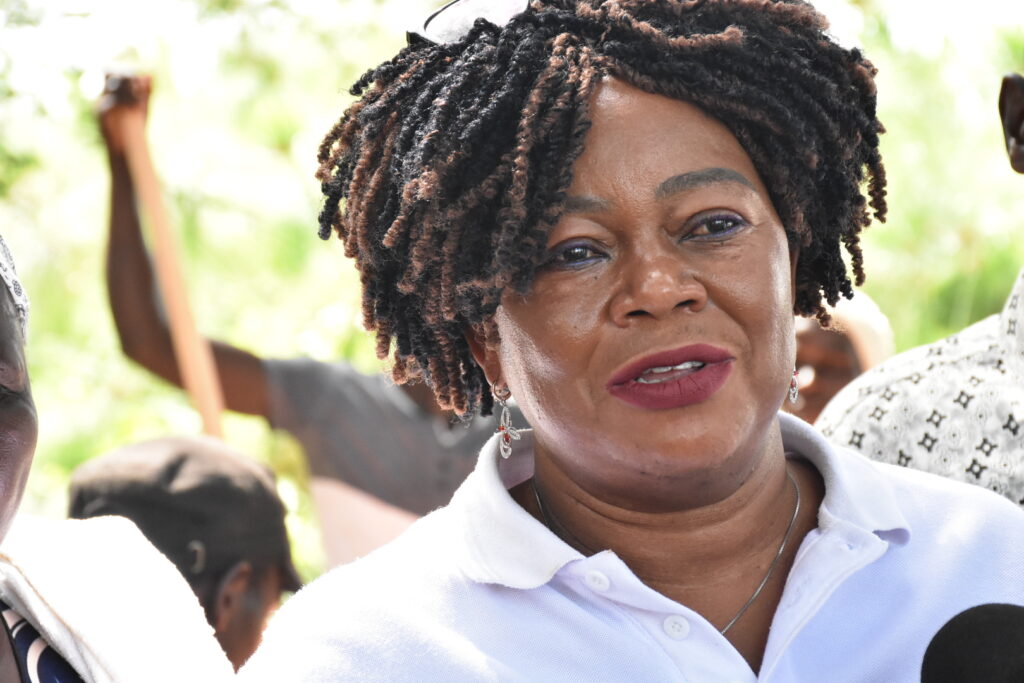
Lorine Odera, Chairperson of the GCDI Board, said the organisation was motivated by the need to address both economic vulnerability and HIV infections among women.
“We wanted to support women so they do not continue being exposed to situations that fuel the spread of HIV and AIDS.This project is about economic empowerment and protecting women from exploitation,” she said.
The organisation raised funds with support from donors to purchase the boat and nets after engaging the women and listening to their challenges.
For the women gathered on the beach, the project represents more than just a boat floating on water. It is a symbol of ownership, security and hope.
As the nets were finally loaded and the boat prepared to leave the shore, the women watched with excitement. Their investment was heading into the lake carrying more than fishing gear.
It carried the promise of income, education for their children, stronger households and a future where access to fish no longer comes at the cost of their health or dignity.
For the widows, mothers and caregivers of Sango Rota Beach, the boat is not merely a vessel. It is an opportunity to chart a new course one where empowerment replaces dependence, where women own the means of production, and where economic freedom helps break a cycle of vulnerability that has persisted along the lakeshore for generations.

