
In 2025, Lake Region Bulletin benefitted from a Climate Culture reporting grant from ClimateXchange.
The project involved the use of cultural lenses when telling climate change narratives. Lake Region Bulletin produced two stories;
Our first story was ‘Kenya’s cultural stone stops crying; restoring its tears may solve more than just Kakamega’s thirst’. This is a story about a cultural rock in Kakamega, western Kenya. The story revolves around a shrewd traditional king who turned into a stone after facing the wrath of the community that accused him of poor leadership and abuse of office.
The narratives
For many years, water oozed from the rock, a symbol of the king weeping in pain because of his rejection by the community. However, the water no longer drips from the crying stone. The community says this is because the king’s tears are drying as the community embraces him back after asking for forgiveness.
However, science explains that the granite rock, formed through volcanic action millions of years ago, had water oozing from it as its location around Kakamega forest is a water catchment area. The drying tears, science explains, is due to the damaged environment which has seen the water table drop, hence there is no longer enough water to drip from the rock.
The second story Lake Region Bulletin produced was entitled ‘Indigenous seeds may hold the key to climate resilience; these communities are fighting for their return.’
This story highlighted how seed preservation is a very important aspect of culture in this community. Residents claimed that culturally, they ensure generational continuation through preservation of indigenous seeds, which they select from their harvest, and keep for the next planting season.
Many of these people inherited the seeds from their parents, who inherited them from their forefathers. Any attempt to lose this identity, they believe, attracts curses to the community, leading to poor harvests.
Science however also explained that many of the indigenous seeds have with time adapted to climate change, and continue to develop traits which make them productive despite the increasingly harsh conditions.
Community screening
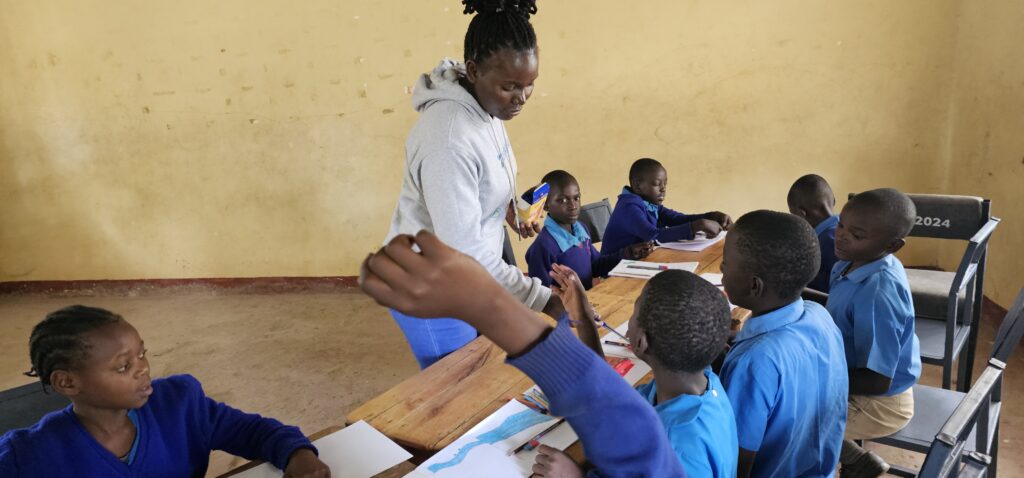
After publishing the stories, we took them back to the communities for screening. For this, we invited the sources interviewed, community leaders as well as other community members who never participated in the production of the stories.
The program was to first screen the stories for students at a selected school within the community, before doing the same in a community hall.
Muraka Primary School is located within Ilesi village of Shinyalu, in Kakamega County. This is the village which hosts the famous Crying Stone.
When we approached the school to screen our work to the learners here, the school head Ms Rose Jahenda was thrilled.
“Our children often tell the story of the stone, and we would be glad to see their reaction to your story,” she said.
Twenty learners aged between eight and 13 years of age were picked from various classes to make up our audience.
As the story was playing, the children keenly followed, with a range of emotions. They smiled and giggled as they whispered in the ears of their colleagues. At some points, their faces were engulfed in shock.
When the screening was done, they had a moment of reflection ahead of a brief engagement.
“Have you seen anyone you know in the story?” asked Lake Region Bulletin’s Kevine Omollo.
All the children had their hands up, and mentioned the names of various sources we interviewed.
“And who knows the stone featured in the story?” we inquired further. Again, all their hands were up.
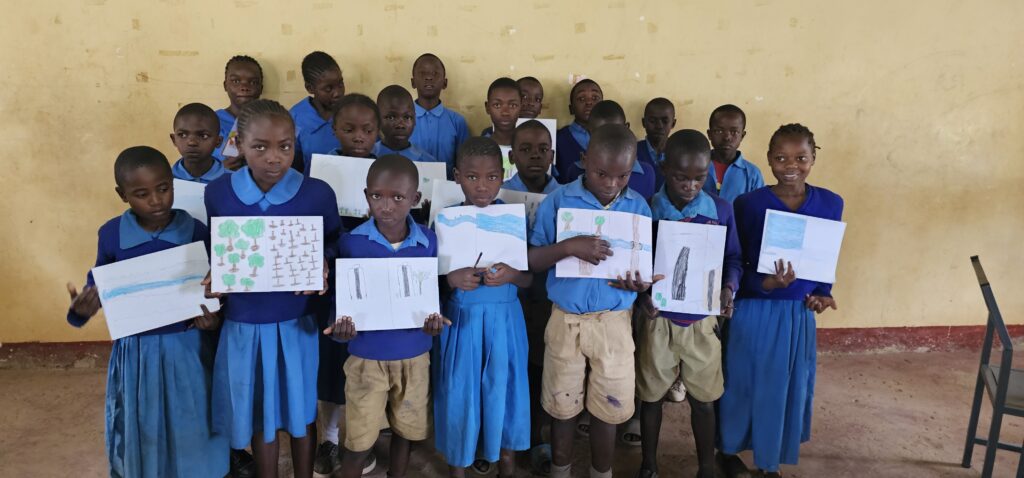
From this 30 minute engagement, the learners shared all the cultural versions of the story, with some confirming that they often pitch tents at the foot of the stone to share these stories with tourists.
They then had another 30 minutes to make sketches illustrating the story of the stone, and the threats it faces, as well as what they think its ideal state should be, borrowing from the scientific version of the story and its reflections of climate change.
Later in the evening, we met over 30 community members at a hall in Kakamega town for the second phase of the screening.
After playing the story, we shared our experience we had with the pupils earlier in the day, exhibiting their work. We witnessed a range of emotions on he faces of the attendees.
Not many of them were aware the children knew so much about the stone. But this experience formed the basis of our discussion on the role of the community in not only preserving culture and taking care of the environment, but also preparing future generations to take over the mantle.
From this engagement with the community, they discovered the role of various players in environmental conservation.
The story brought in the various voices involved in the area’s environmental conservation, such as the Kenya Forest Services, Kakamega County Government, Masinde Muliro University’s Department of Disaster Management, among others.
“Isn’t this what media houses need to do?” posed Jane Ombeva in response to the screening when we provided a platform for the various stakeholders to discuss beyond the story.
After the discussions, the various stakeholders built networks, pledging to work together in promoting environmental conservation.
“I now have more people to engage in our research programs relating to this matter,” said Professor Stanley Omuterema, Environmental expert from Masinde Muliro University, as he confirmed that two post-graduate students from his university are already working on research topics from the engagements around the Crying Stone story.
Things were no different with the story of the indigenous crop farming in Busia, in western Kenya.
At a local community hall, over 20 people showed up, many of whom were not sure of what the story screening was all about.
“I have never interacted with the media, and this was my first time. I had not known it is this involving,” said Caroline Anyona when we informed her about the upcoming screening of the story.
Three months earlier, we had interviewed her for the story of the indigenous farming.
She was however positive, and helped with mobilising community members and other stakeholders to attend the screening.
“You already interviewed me and published the story. But if there is anything more you want, I am available,” she added.
At the hall, the attendees were keen as the story played. And when it ended, they all broke into ululations and clapping.
They had never seen themselves in media stories, and they never believed their simple acts of preserving and sharing indigenous seeds would be a story of great interest to the world.
“We are glad that many more people have been reaching out to us to inquire about the seeds after you published this story,” Ms Anyona tells us.
In the sitting, young attendees were left shocked that the indigenous farming which they had despised was putting their parents into the limelight.
A 30-minute discussion in the hall was all they needed for their motivation to do more. With the discussion came more ideas on how to improve on their farming, new markets for their seeds, and networks for more collaborations.
Ms Anyona and another colleague farmer accepted to accompany us to the neighbouring Bukhuma Primary where we screened the story to learners.
Just like their counterparts at Muraka Primary School in Kakamega, these pupils were thrilled as they watched their parents and relatives share knowledge about the indigenous seeds.
The school has about half an acre of farm within the compound, where they plant vegetables.
The rich discussions from the pupils demonstrated how informed the children are about agriculture and climate change.
School seed bank
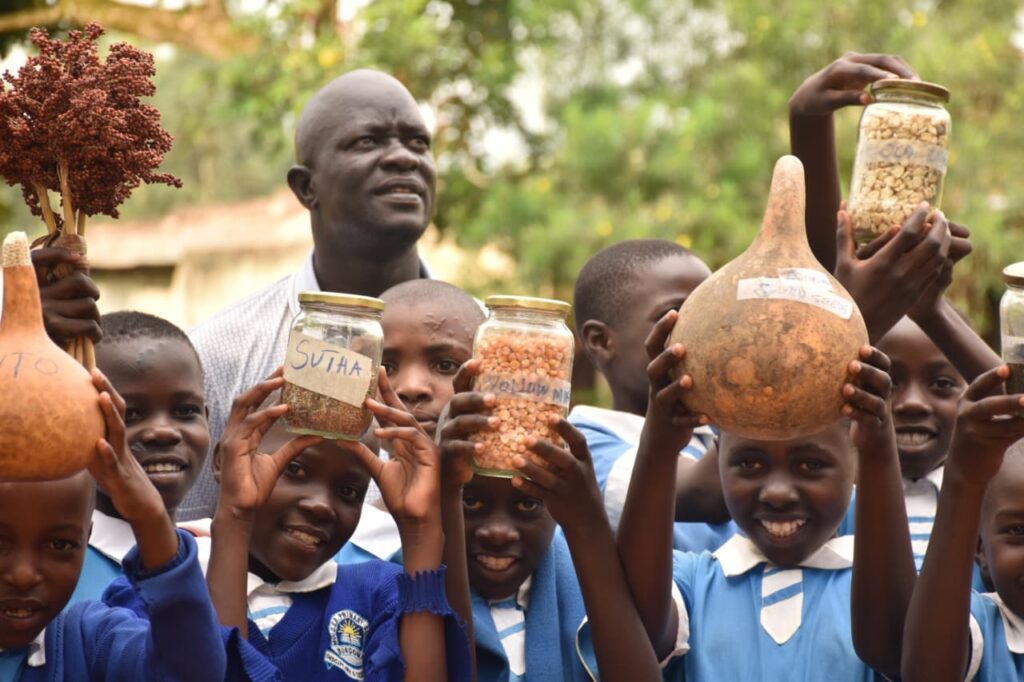
At the school, we provided indigenous seeds we sampled from the community—and from them, created a brand new seed bank.
The school is expected to multiply the seeds in their farm, and share with learners to take to their parents as a way of spreading the indigenous seeds.
To make this work, the school selected 30 pupils to form an Environment Club that will manage the seeds, and lead their multiplication in the school farm.
“This is a huge challenge to us, and we have to make sure we account for these seeds, not just for you but for the community,” said Josephat Ooko, the Deputy Headteacher of the school who has offered to be the patron of the new club.
“We will ensure we invite you when we are planting these seeds, and we want you to be part of this journey till harvesting,” he noted.
“In many instances we have seen media focus on highlighting tragedies and all the bad things in the community. This is unique. You not only highlighted the good things the community is doing, but also want to be part of promoting it,” he added.
These experiences not only made us rethink how to plan coverage of stories within communities, but also change our view on the role of various stakeholders in trying to make the world a better place.
Just like these communities were surprised at our style of journalism, we were also shocked at how our small efforts meant so much to them.
We had not tried this before, and had it not been for the engagement with Climate Xchange, we would not have had this experience.
This is a huge challenge to us, as it is not only time consuming, but also resource demanding.
So as we look at sustaining this form of journalism, we are looking into collaborations beyond ClimateXchange.
Narrated by Kevine Omollo and Winnie Ali, Jacky Opiyo/Lake Region Bulletin

