
The International Labour Organization (ILO) has taken its initiative against child labour in the coffee and tea sectors to the doorsteps of the leadership of cooperative societies.
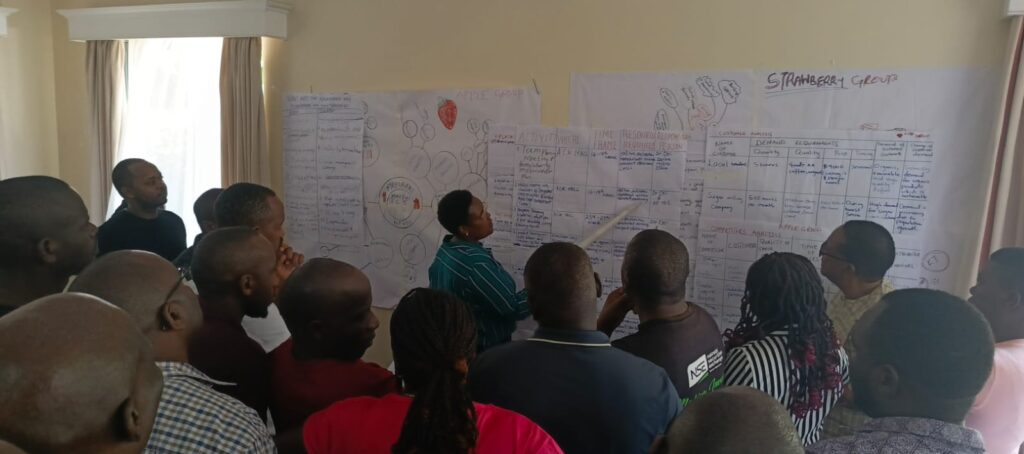
As part of strengthening the capacities of the cooperatives to lead in stemming the vice, ILO through the ACCEL Africa Phase II Project conducted a high-level Training of Trainers (ToT) workshop in Kisumu from March 2 to 14, 2026.
The training brought together 27 participants including; cooperative officers, representatives of cooperative unions and farmers’ associations, County Child Labour Committees, and government officials from Kericho and Kisii counties.
The initiative forms part of a broader systems-based approach led by the ILO to address the root causes of child labour, including poverty, low household incomes, informality and weak institutional capacity in agricultural value chains.
Child labour cannot be eliminated without addressing the economic vulnerabilities faced by farming households. The ILO strengthens cooperatives because they are democratic, community-based institutions that improve incomes, promote decent working conditions, and embed accountability at the local level
Dancan Chando, the National Project Officer for ACCEL Africa project
Dancan Chando, the National Project Officer for ACCEL Africa project noted that cooperatives remain strategic actors in the elimination of child labour in Kenya’s tea and coffee supply chains.
He noted that the training aligns with Kenya’s national commitments to eliminate child labour and uphold fundamental principles and rights at work, while supporting global efforts toward sustainable and responsible sourcing.
“Strong cooperatives are essential for building transparent, responsible and child-labour-free supply chains,” said Mr Chando.
He added: “Child labour cannot be eliminated without addressing the economic vulnerabilities faced by farming households. The ILO strengthens cooperatives because they are democratic, community-based institutions that improve incomes, promote decent working conditions, and embed accountability at the local level.”
Worrying child labour statistics
Funded by the Government of the Netherlands, the ACCEL Africa Project (Accelerating Action for the Elimination of Child Labour in Supply Chains in Africa) seeks to strengthen policy frameworks, institutional systems and partnerships to promote child-labour-free production in key sectors across Africa. In Kenya, the tea and coffee sectors are central to this effort.
ILO reports that about 135 million children are involved in child labour globally, with 50 million of them in harzadeous child labour.
In Kenya, the Kenya National Bureau of Statistics reports that roughly 1.3 million children aged five and 17 years are engaged in child labour, with agriculture being the largest employer, followed by domestic service and informal sector labor.
With this in mind, ILO believes that cooperatives in the agriculture sector are best placed to stem the vice.
According to ILO, the cooperatives can play a transformative role in eliminating child labour by; raising awareness among members and communities, improving adult employment and income opportunities, promoting safe and decent working conditions, embedding child labour prevention into cooperative policies and training, and facilitating access to social protection and financial services.
Kericho County Dr Leonard Otii Director of Cooperatives noted that the initiative was transformative as it builds on the cooperative-led solutions in tea-growing communities.
“As a leading tea-producing county, Kericho recognizes that sustainable growth must go hand in hand with labour standards compliance. Strengthening cooperative governance and member awareness is key to improving farmer incomes and safeguarding children’s rights. The ILO’s support enhances our institutional capacity to deliver on this mandate,” said Dr Otii.
His sentiments were echoed by Kisii County Deputy Director for Cooperatives Bernard Ochieng who said his office will sustain the initiative through embedding sub committees on child labour within the cooperative societies in the county.
Our cooperative officers are now equipped to cascade the training across Kisii County, ensuring that child labour prevention is embedded in cooperative policies, education programmes, and day-to-day management practices
Kisii County Deputy Director for Cooperatives Bernard Ochieng
“This initiative strengthens systems, not just individuals. Our cooperative officers are now equipped to cascade the training across Kisii County, ensuring that child labour prevention is embedded in cooperative policies, education programmes, and day-to-day management practices,” said Ochieng.
Those who benefited from the training are expected to hit the ground running through structured knowledge sharing with other players within the sector.
The trainees are expected to provide regular reports to ILO on their activities and engagements with other sector players in order to earn ToT certification every three years.

