Maurice Ouko watches his two-month-old tilapia dart through the water inside his fish cage on Lake Victoria, moments after feeding time.
Nearby, a small floating house, its door facing the cage, shelters a night guard tasked with protecting the fish from thieves.
For Ouko and other cage fish farmers in Kisumu, the round-the-clock surveillance is a necessary expense as they wait months for their stock to mature and fetch a price at market.
Poisoned lake
Yet beneath the floating structures lies a threat that keeps Ouko awake at night the fear that hazardous waste could seep into the lake, poison the water and wipe out his investment.
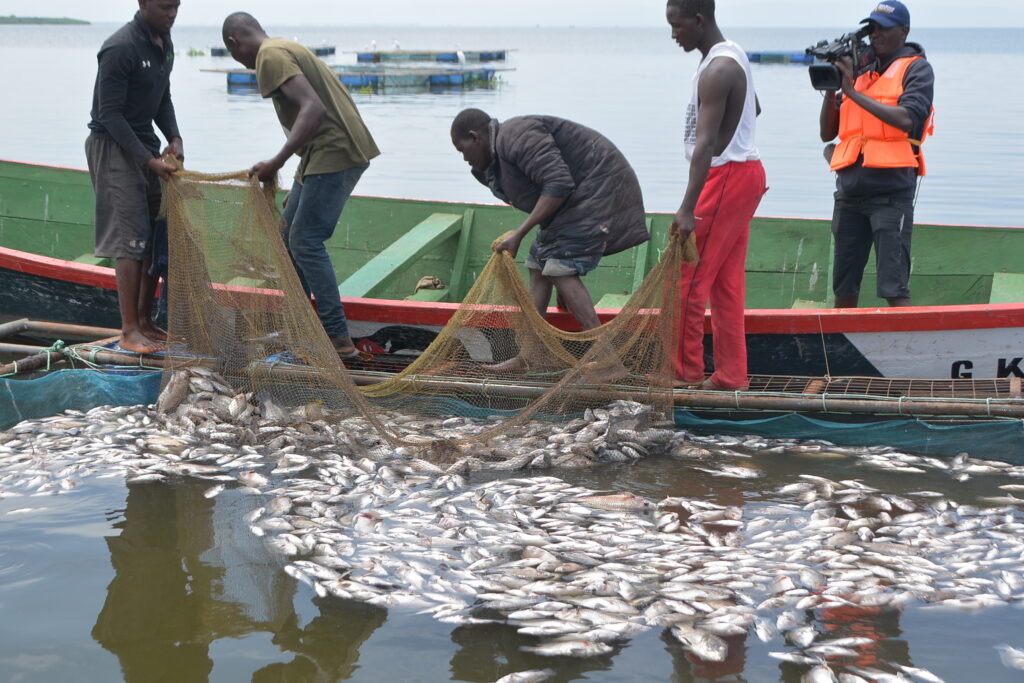
That fear became reality in September last year. Ouko was among dozens of farmers who lost fish after what authorities later attributed to toxic industrial discharge killed large numbers of tilapia along the Winam Gulf.
Communities in Dunga, Usoma and parts of Kano were among the worst affected. Farmers woke to scenes of dead fish floating in cages and washing up along the shore.
“It was horrific. We lost a fortune as a result of hazardous waste dumped into the lake, directly and indirectly through streams that empty into it,” Ouko said.
Fish farmers and fishermen blame weak enforcement of environmental laws, saying industrial waste continues to reach the lake with little oversight. Kenya is a signatory to the Bamako Convention, an African treaty that bans the import of hazardous waste and obliges countries to strictly regulate the generation, movement and disposal of toxic materials.
We have seen water in some rivers turn extremely dark after factories dump sludge upstream
David Owino, fisherman at Dunga Beach
Environmental experts say effective implementation of the convention could help prevent incidents like the one that struck the Winam Gulf by tightening controls on hazardous waste at source including mandatory tracking of waste, licensing of transporters, and penalties for illegal dumping.
But poor enforcement has left rivers flowing into Lake Victoria heavily polluted, farmers say, turning the lake into a dumping ground for untreated effluent.
“The rivers draining into this area carry toxic waste from different parts of Kisumu,” Ouko said.
He estimates his losses from the September incident at more than 500,000 Kenyan shillings ($3,200), blaming what he described as lax oversight of industrial pollution.
Contaminated inlets
Several rivers and streams discharge into the Winam Gulf, including the Wigwa, Kibos and Kisat rivers. Farmers say the waterways routinely carry untreated waste from upstream factories.
“We have seen water in some rivers turn extremely dark after factories dump sludge upstream,” said David Owino, a fish farmer in Dunga.

A report released in November by the Kenya Marine and Fisheries Research Institute (KMFRI) linked the fish deaths to untreated discharge entering the lake.
The report said a strong odour detected during the incident signalled severe pollution, which contributed to oxygen depletion around the fish cages.
According to KMFRI’s Director for Freshwater Systems Research, Christopher Aura, water samples taken at river mouths showed high contamination levels.
“The dissolved oxygen levels were lower at the river mouths compared to other parts of the lake,” Aura said in the report. “This indicates high oxygen demand, attributed to industrial or domestic discharges.”
These findings point to gaps the Bamako Convention was designed to address, particularly the failure to monitor hazardous waste flows from industrial sites to disposal points, and to prevent illegal discharge into waterways.
Under the convention, Kenya is required to establish systems to track hazardous waste, ensure it is treated before disposal, and stop illegal dumping that threatens human health and ecosystems. Proper enforcement, experts say, would reduce the risk of toxic effluent entering rivers that feed into Lake Victoria.
Visible signs of pollution
At Ogal beach, fishermen say they are still struggling to recover after piles of dead Tilapia washed ashore and cage stocks were wiped out.
George Wesonga, who owns a cage with a capacity of 5,000 fish, has restocked with just 1,000 fingerlings.
“The threat of hazardous waste killing our fish is something we live with every day,” he said. “Last year, I lost more than 3,000 fish that were ready for harvesting.”
Wesonga said he could not identify the exact chemicals involved but pointed to untreated industrial waste entering the lake.
“The government must rein in those dumping toxic waste into the lake,” he said. “We all have a duty to protect the environment, but the state has to take the lead.”
A recent study by the Lake Victoria Basin Commission (LVBC) highlights regional implications of weak hazardous waste control, recording high pollution levels in Kisumu, Mwanza, Kampala and Entebbe.
The joint study by experts from Kenya, Uganda and Tanzania warned that pollution in one part of the lake can quickly affect communities across borders, a risk the Bamako Convention seeks to address through cooperation and shared responsibility among African states.
For fish farmers like Ouko, the link between policy and survival is clear.
“If hazardous waste is properly controlled before it reaches the lake, then our fish can survive,” he said, watching the cages bob gently on the water. “Without that, we stand to lose everything.”

