
“I give you every seed-bearing plant on the face of the whole earth and every tree that has fruit with seed in it. They will be yours for food.”
This Bible verse from the book of Genesis 1:29 has remained imprinted in the mind of Caroline Anyona for more than five decades.
At first, it appeared as an excerpt from the numerous random quotes by her grandmother. However, today, the verse has shaped her agricultural life and cemented her cultural beliefs.
At the age of three, Ms Anyona, now 61, lost her parents, forcing her maternal grandparents to take over her parental responsibilities.
Farming was her granny’s key economic activity, and everyone in the family had to be part and parcel of it.
“It was here that I was introduced to passing of seeds from my generation to the next,”said Anyona.
When she transitioned to adulthood and married, the grandmother handed her some seeds and whispered, ”The seed is the foundation of any generation; do not lose them.”
To Ms Anyona, losing the seeds would attract a generational curse. She has maintained the seeds, replanting them every planting season, and she hopes to pass them on to her children and grandchildren.
When the Lake Region Bulletin team visited her at her Musoma Village in Elugulu, Butula Sub County, in Busia County, Ms Anyona was hosting her colleague members of the Jitegemee Women Group.
In her compound is a modern seed bank built with support of donors who were happy with the women’s concept of seed culture.
In the house are samples of bush okra/jute, dry maize, vine spinach, black bean groundnuts, red beans, spider plant, Ethiopian cabbage, cowpea, and black nightshade, among other seeds.
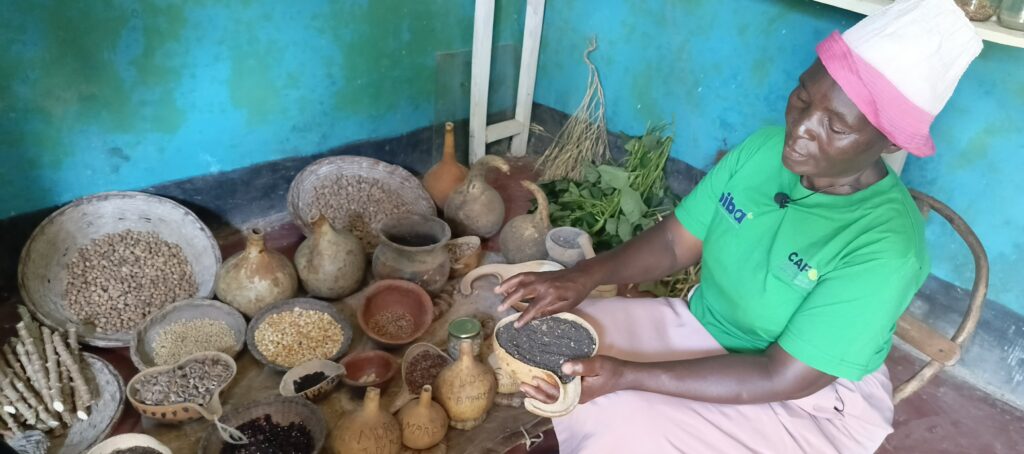
After every harvest, the members select the best seeds from their produce, prepare them for preservation, and bring them to the store.
“We dry cow dung, burn it, and use the ash to preserve the seeds. The seeds are put in airtight glass bottles, and it has been effective for us for all these years,” said Phylis Awino, another member of Jitegemee.
When the planting season nears, these farmers converge, examine the seeds, and pick the best for planting. Any extra is sold to non-members.
Through this method, they have managed to preserve the seeds inherited from their forefathers, and their mission is to ensure that the seeds are passed on to generations to come.
Awino has been farming indigenous crops for the past 18 years. Part of her main crop is red millet (nakhaloli), which she inherited from her mother.
“The good thing is that despite the unpredictable rains, I have never lost an entire field. Every planting season, I must get something,” she said.
The group believes those who abandoned the indigenous seeds to embrace the modern crops face curses associated with lifestyle diseases.
“I have seen several instances where people are abandoning the modern crops and seeking traditional ones such as sorghum,” said Ms Anyona.
Jitegemee is the Swahili word for self-reliance. This group of over 20 women came together in 2003.
“Farming is the main economic activity here, and we wanted to empower ourselves through farming,” she said.
Through the group, they jointly worked on a member’s farm rotationally, sharing seeds and knowledge.
Farming for environmental sustainability
In 2004, the group was approached by a conservationist.
A retired public servant had registered a Community-Based Organization named Busia Environmental and Resource Management said Ms. Anyona.
Berma focused on promoting sustainable environmental practices and community development within the region through activities such as agroforestry, seed banking, and promoting sustainable agriculture.
It was Jitegemee’s seed banking culture that attracted Berma’s attention.
Anyona and her colleagues were keeping up with the forefathers’ cultural demands to maintain their generations. Still, to Berma, this was a good agricultural practice that would save the world from the impacts of climate change.
Kenneth Ogola, the team leader for Berma, notes that the CBO came in to help preserve the indigenous seeds that were facing extinction.
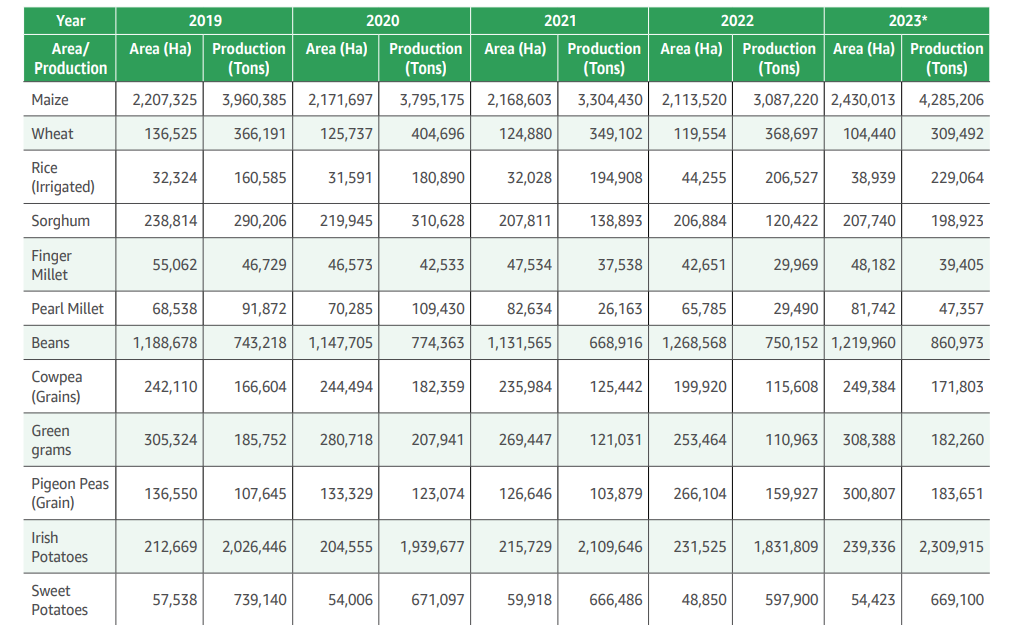
While indigenous crops, especially vegetables, are gaining recognition for their nutritional and economic potential, the Ministry of Agriculture acknowledges that they are still considered minor crops in overall agricultural plans, with no specific production targets.
According to Mr Ogola, food security was threatened by using modern crops, which required massive amounts of chemicals to produce.
Many indigenous crops reproduce, and their seeds can be replanted, as opposed to the modern crops, which you plant once and get back to the shop to buy new seeds, said Ogola.
Apart from losing seed ownership, Ogola said many hybrid crops also require massive use of chemicals such as synthetic fertilizers, herbicides, and pesticides, among others, to realize good produce.
All these have impacts on the environment, which in turn has effects on climate change, he said.
A few kilometers from Ms. Anyona’s Musoma village is Siemahanga Bulemia village. This is the home to Dambakana Women’s Group.
Like Jitegemee, the Dambakana group brings together over 20 women engaged in farming.
These women came together in 2001 to empower themselves through table banking.
Farming was the main economic activity. Hence, they chose to support each other in farm work with the aim of economic empowerment to sustain the table banking initiative.
“At first, we were mainly doing cassava, maize, millet, and indigenous vegetables,” said Bibiana Oduori, the group chair.
According to Ms Oduori, some group members joined them after realizing the good produce from their crops compared to hybrid ones.
Today, she says the demand for these seeds has increased, and the group has been selling some as their source of income.
With this demand spreading across western Kenya, Transcommunity, another organization promoting Indigenous seeds, engages farmers in other parts of Busia and the neighboring counties.
Ms Manea Masaki is an extension officer with the organization. When the Lake Region Bulletin team visited, she engaged the Angorom Farmers group members in Teso South.
“When we were born, we were used to the indigenous seeds. At some point, these seeds disappeared, and the hybrid ones came. We realized that we lost our cultural identity with the disappearance of the indigenous seeds,” she said.
This pushed the group to begin promoting the indigenous seeds through the engagement of farmers to reproduce the few they could trace.
“We could give a farmer as little as one cob of maize and expect them to multiply them and reshare with other farmers,’ she added.
A 2019 publication by ResearchGate from a study conducted in two neighboring counties in western Kenya: Kisumu and Bungoma titled ‘African Indigenous Vegetable Seed Systems in Western Kenya’ shows that more farmers prefer self-saved seeds than accessing them through the formal systems.
Promoting indigenous seeds as a cultural heritage
Participatory Ecological Land Use Management (PELUM) is a civil society organization promoting agroecology in Kenya.
Farmer Managed Seed System is one of the projects it has been promoting, not only as a means of promoting cultural heritage alone but also as a climate-smart agriculture.
Beth Omae is PELUM’s Zonal Coordinator for Rift Western Kenya, which is based in the Kakamega Regional Office.
She says the network has been training farmers on farm management practices, how to pick the best produce for use as seeds, and the best methods of preserving them.
“When they plant, we train them to monitor and mark the first seeds to sprout and produce cobs, those with the biggest cobs, and many other good qualities. Once marked, they will be picked and used as seeds,” said Ms Omae.
The training also involves record keeping to help monitor and record crop development and other farm practices.
Ms Omae admits there is close link between culture and climate change regarding indigenous crop farming.
“Generally, we have particular crops associated with particular communities and cultures, and when these crops disappear, such cultural identities disappear,” she said.
According to the Ministry of Agriculture in Kenya, indigenous crops contribute significantly to agricultural produce, particularly in the vegetable sector, making up 30 percent of marketed vegetables.
Indigenous seeds good for climate resilience
Professor Mathews Dida, a Genetics and Plant Breeding expert, has been undertaking research for over three decades and agrees that indigenous seeds have numerous climatic advantages.
Professor Dida, who teaches at Maseno University, says through research indigenous crops have proved to be tolerant to climate stresses, as well as showing resistance to common herbicides as well as crop diseases.
With time, the indigenous crops have become adaptive to these stresses and continue to perform well despite the impacts of climate change, said Professor Dida.
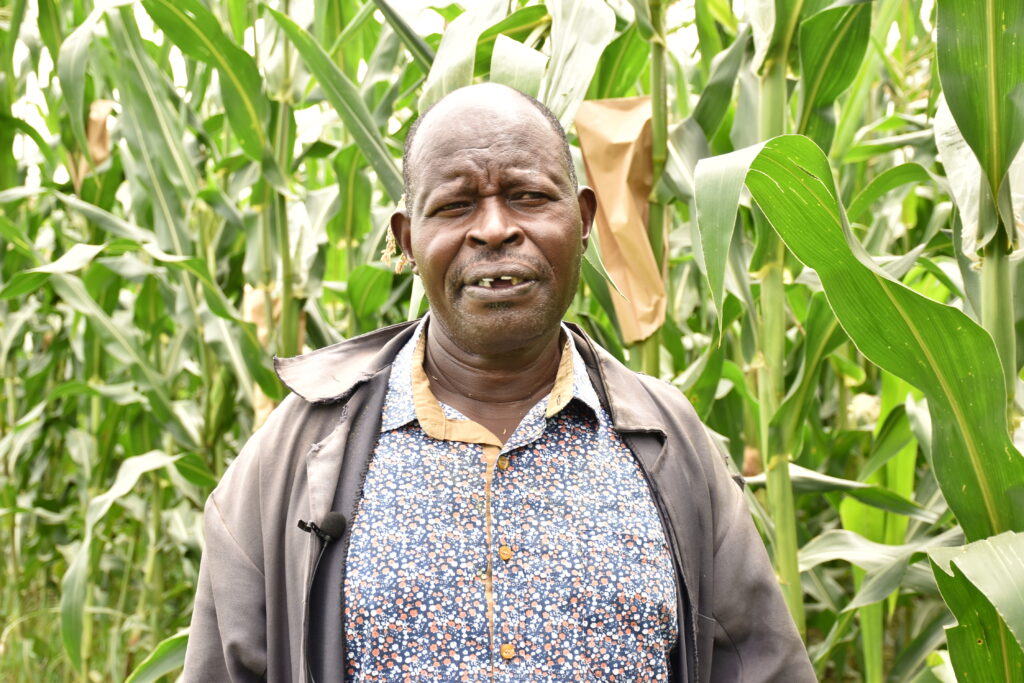
Professor Dida says in his extensive research he has worked with local farmers and admits that groups like Jitegemee and Dambakana have become a key genetic resources for researchers.
At the university’s crop breeding field, Dida has hybrid and indigenous crops, some of which are sampled from the communities.
“Our focus is any good material that can adapt to the agronomic and environmental challenges while also responding to the needs of the communities,” he said.
He noted that despite the increase in soil acidity, changing rain patterns, and emergence of crop pests and diseases, indigenous crops have continued to perform since they continuously adapt to nature.
He says hybrid seeds, on the other hand, are meant for specific ecosystems, and their seeds cannot be reused for planting, hence expensive to the smallholder farmers.
Adoption of hybrid seeds must take into consideration several factors such as taste, nutritional value, and weight, among others, which make them acceptable to the local communities, said Dida.
He noted that many hybrid crops may also not coexist with other crops, compared to indigenous crops, which allow for mixed cropping and are hence useful in conservation.
However, even as the communities push for indigenous seeds, the other challenge is the Kenyan Seed Law, which outlaws the distribution of unregistered seeds.
Kenya’s Seeds and Plant Varieties Act (CAP 326) regulates the commercial production and sale of seeds to ensure quality and protect breeders’ rights.
The Act aims to protect plant breeders’ rights, allowing them to recover their investment in developing new varieties.
However, it has been criticized for restricting the informal seed exchange practices common among smallholder farmers, potentially hindering access to diverse and locally adapted varieties.
The 2019 Kenya Population and Housing Census puts the number of small-scale crop farmers in Kenya at approximately 3.5 million.
According to the Kenya Plant Health Inspectorate Service (KEPHIS), the informal (indigenous) seed sector accounts for between 60 and 70 percent of the seeds planted by Kenyan farmers.
Some small-scale farmers have become victims of the law in Kenya, facing arrests and prosecution for distributing such seeds.
Professor Dida says there is need to relook at the law to ensure that local small-scale farmers can maintain the indigenous seeds and share among themselves without restrictions.
Government’s take on indigenous seeds
Prof Dida’s sentiments are echoed by Bungoma Governor Kenneth Lusaka, who notes that indigenous crops are at the heart of Kenya’s food sovereignty, as they are resilient to local climatic conditions and deeply rooted in our cultural heritage.
In many rural communities, indigenous crops such as sorghum, millet, cassava, and traditional vegetables have fed generations and continue to offer reliable nutrition where commercial systems fail. Their diversity provides a safety net during climate shocks and is critical in ensuring dietary diversity and nutrition security. In short, they are not just crops; they are a legacy of resilience, said Lusaka.
Agriculture is a devolved function in Kenya, with county governments playing a crucial role in promoting the sector.

Mr Lusaka, the Chair of the Agriculture Committee in the Council of Governors (CoG), says the committee advocates for the recognition and integration of community seed banks and indigenous seed custodians into formal policy frameworks.
Counties are also being encouraged to document and register indigenous varieties, promote seed fairs, and support farmer-led seed multiplication initiatives, he said.
He notes that the proportion of Indigenous seeds in county distribution programs remains modest due to procurement guidelines and the national seed certification system favoring commercial varieties.
He says there is, however, a growing recognition of the need to balance this with local seed systems, adding that in some counties, such as Kitui, Bungoma, and West Pokot, Indigenous seed varieties are being distributed in parallel with certified seeds, especially in ASAL (Arid and Semi-Arid Land) regions where these varieties perform better.
According to Mr Lusaka, hybrid seeds have their place, especially for commercial agriculture and climate resilience, but they must not replace diversity.
As the Agriculture Committee, we advocate for policies encouraging agroecological balance. We are proposing that every climate resilience program include a biodiversity safeguard clause, ensuring that indigenous seeds and knowledge are preserved alongside modern interventions, he said.
He added: The current Seed and Plant Varieties Act, as it stands, creates unnecessary barriers for smallholder farmers who have been saving and sharing seeds for generations. It must be reviewed. We advocate for a tiered regulatory approach that protects small-scale farmers’ rights to save, share, and trade indigenous seeds within their communities. Criminalizing these practices is not just unjust; it threatens our agricultural heritage and resilience.
For farmers like Caroline Anyona, and the women in her group preserving indigenous seeds is more than an agricultural act.
It is a sacred duty to ancestors and a shield against an uncertain climate.
As they carefully pass down seeds to the next generation, they also pass down a legacy of resilience, belief, and the power of self-reliance rooted in the soil of their culture.
By Kevine Omollo and Jackline Opiyo
This story was funded by climateXchange (cXc), a nonprofit initiative dedicated to helping global newsrooms enhance local climate storytelling and its intersection with cultural narratives.

